Classic Christmas Markets
8 Days | Nuremberg to Frankfurt
2026 | A cruise for those wanting to experience the quintessential magic of the holidays.
Learn More
Choose when you want to travel
From exotic Budapest, “Queen of the Danube,” to imperial Vienna, “City of Waltzes,” to the sky-high spires of Cologne’s Gothic cathedral—centuries of intriguing history and culture unfold before your eyes. The Melk Abbey’s great library overlooking the Danube and the Würzburg Residence’s soaring ceiling fresco by Tiepolo will leave you mesmerized. And throughout your journey, tantalize your senses with exclusive wine, apricot brandy and beer tastings, along with regional culinary delicacies. Discover the grand sweep of history and the dynamic present along legendary rivers on a magnificent journey that gives you the best of Europe’s great treasures as well as off-the-beaten-path gems.
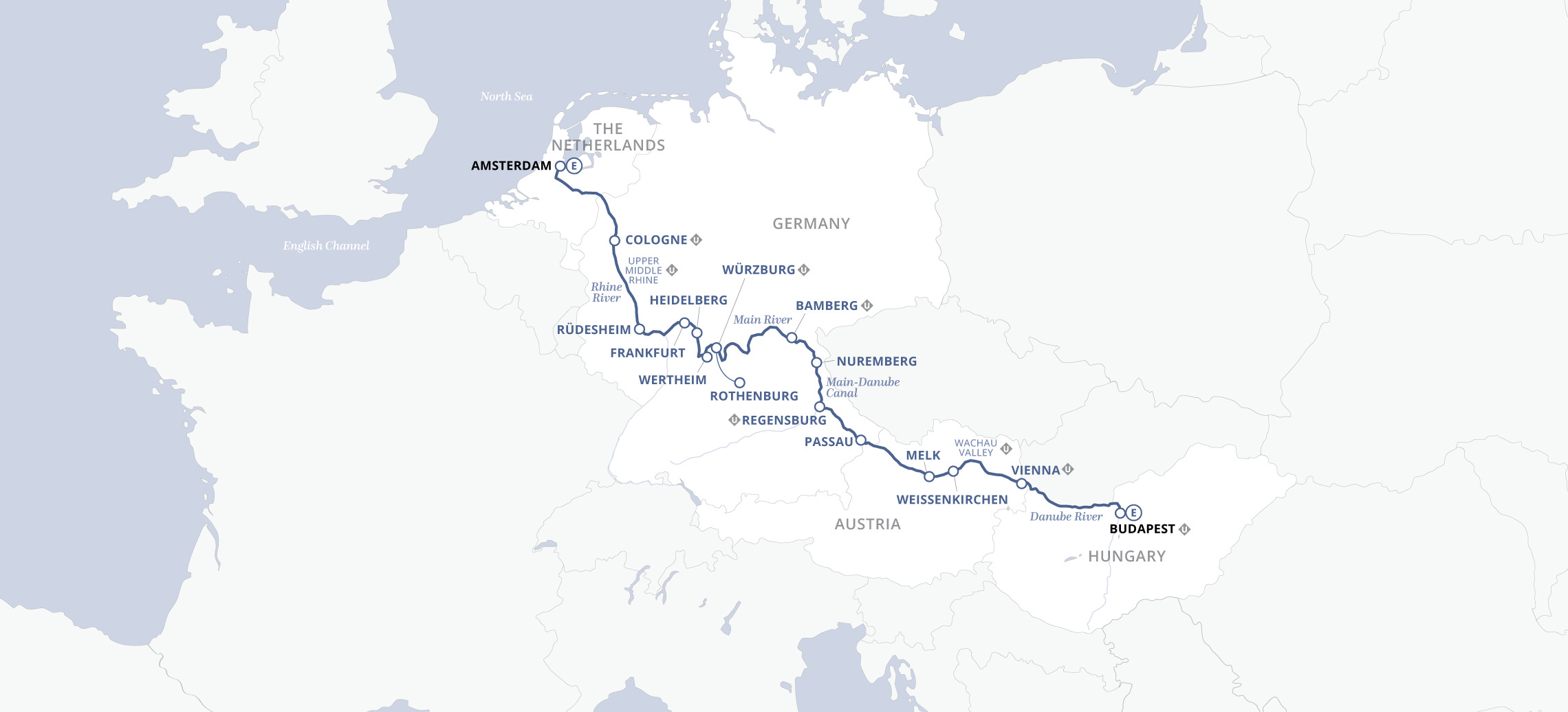
This day-to-day schedule is subject to change. Your official Schedule at a Glance will be delivered with your cruise e-documents 21-30 days prior to embarkation.
Select Cruise Direction
The embarkation location changes by cruise date. Please refer to the Dates & Pricing tab or your cruise ticket for specific departure details.
Optional, Budapest Pre-Cruise Extension
Day 1
Budapest (Embark)
Arrive at Budapest Ferenc Liszt International Airport. If you have arranged a Uniworld arrival transfer, you will be greeted by a Uniworld representative and transferred to the ship.
Day 2
Budapest
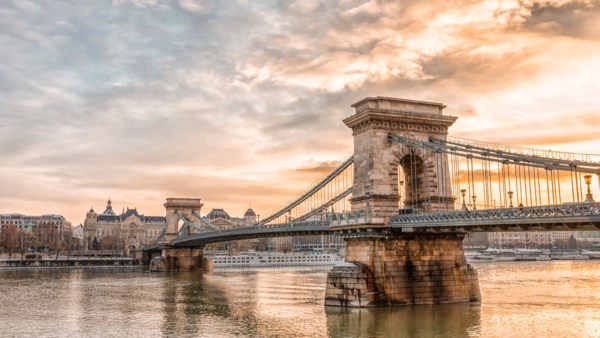
Called the “Queen of the Danube,” in part because of the way the city hugs the banks of the river, Budapest is an enchanting city that vibrantly mixes East and West, medieval and modern. Made up of two parts— Buda (the hills) and Pest (the flatlands)—and divided by the Danube, Hungary’s capital presents an array of architectural styles that reveal its long and varied history. You’ll have two enticing ways to experience the city—a panoramic guided tour aboard a motorcoach with a visit to the Parliament, or discover the Budapest that locals love on a special walking tour of the city’s most important landmarks.
In the evening, a special Captain’s Welcome Reception and Dinner will be prepared for you.
Take in the highlights of Budapest on a panoramic tour down Andrassy Avenue, a bustling promenade lined...
Read More
Take in the highlights of Budapest on a panoramic tour down Andrassy Avenue, a bustling promenade lined with breathtaking Neo-Renaissance architecture. The construction of this street was part of a concerted effort to establish Budapest as a modern metropolis during the 19th century, making the grandeur of these buildings as much a political statement as an artistic one. Today, you can enjoy both the beauty and the history of this UNESCO-designated avenue as you pass through, marvel at Heroes’ Square, and make your way to the top of Gellért Hill, where you’ll look down to incredible views of both the Buda and Pest sides of the city.
Stepping off the coach, you’ll enter the iconic Parliament building that commands Budapest’s skyline. Likely the most famous building in Budapest, this masterpiece of Neo-Gothic architecture is as spectacular inside as out.
Today your guide will show you how to snack around Budapest like a local, starting with a tram ride to...
Read More
Today your guide will show you how to snack around Budapest like a local, starting with a tram ride to the House of Parliament. Hop off the tram and take a short walk to your first treat: a coffee break at the First Strudel House of Pest. Energized by your cup of coffee, you’ll continue your walk down to St. Stephen’s Basilica—a handsome Neo-Classical building that is one of Budapest’s most significant cultural sites.
From there, we’ll head to the Great Market Hall to sample some traditional Hungarian fare, such as salami, sausages, and cheese, while your local expert explains the intricacies of Hungarian cuisine.
Masterpiece Collection · $115 per person
Read More
$115 per person / €100 EUR onboard
On your way into the Jewish Quarter, take a panoramic drive along the UNESCO-designated Andrassy Avenue and get off the coach near the Dohány Synagogue. The Great Synagogue of Budapest (also known as the Central Synagogue) on Dohány Street is a good starting point to learn about Jewish Budapest. It is one of the largest synagogues in the world and is also home to the Hungarian Jewish Museum. From there, we’ll take a walk through the Jewish Quarter and stop at a café in the area for a slice of flodni, a traditional sweet of layered pastry filled with various nuts and jams.
Intermediate
*Masterpiece Collection are optional experiences that go above and beyond our daily selection of included excursions and can be booked for an additional fee. Select Masterpiece Collection Optional Experiences can be pre-booked. Please note that requests to pre-book must be made by calling our Reservations Team no later than 6 days prior to departure and are subject to availability. Some venues are limited in the number of guests they can accommodate. Guests can book onboard (space permitting) and pay in Euros. Pre-booked Masterpiece Collection Optional Experiences are refundable up to 5 days prior to the cruise/tour start date; if inside of 5 days they are non-refundable. Select Masterpiece Collection Optional Experiences require a minimum number of participants and are subject to cancellation (with full refund) if minimum is not met. Masterpiece Collection Optional Experiences are non-commissionable. Prices are subject to change. Masterpiece Collection excursions may not operate if they occur on a holiday or if they require a minimum number of participants and that minimum is not met.
Day 3
Cruising the Danube River, Vienna
Today is your day to relax onboard, enjoying the luxuries of your river cruise ship while soaking in the spectacular scenery all around you as your ship heads for Vienna. Come up to the Sun Deck to admire the city’s landmarks strung along the riverbanks. This evening enjoy a night out with a private Johann Strauss experience.
After dinner onboard, join us on a private visit to a museum and concert venue that offers a deep dive...
Read More
After dinner onboard, join us on a private visit to a museum and concert venue that offers a deep dive into the life and legacy of Johann Strauss II. Composer of “The Blue Danube” and one of Europe’s most celebrated musicians, Strauss represents a vital piece of Viennese culture and history. Begin with an interactive tour of the museum, which employs audio-visual elements to immerse you in the story of Johann Strauss II. Afterward, enjoy a live concert of Strauss compositions.
Day 4
Vienna
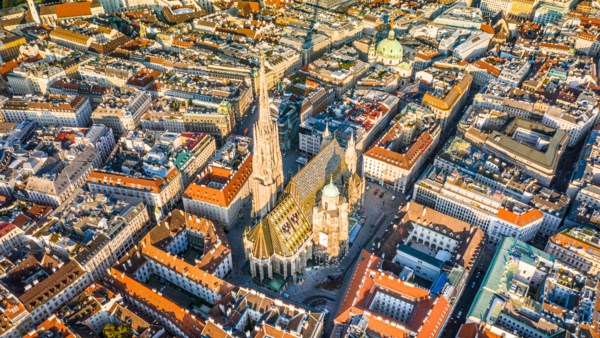
Vienna is a cultural treasure trove revered for its art and music (and sinfully rich pastries). Embark on a tour of the city's imperial highlights and a visit to Hofburg Palace or a visit to an interactive multimedia experience featuring the work of Mozart.
Ring Street, the great horseshoe-shaped boulevard lined with many of the city’s major...
Read More
Ring Street, the great horseshoe-shaped boulevard lined with many of the city’s major landmarks—Parliament, City Hall, the Vienna State Opera, glorious palaces, and museums—is a mere 150 years old, practically an infant for a city of Vienna’s age. It replaced the walls and fortifications that had protected the city for centuries. Its construction was a testament to confidence, forward-thinking, and grand urban planning, and it resulted in a 50-year building spree. You’ll pass most of these opulent landmarks on your way to the older section of the city, the area the walls once enclosed.
Later, you’ll walk along Kärntner Street, the celebrated pedestrian boulevard that links the State Opera with St. Stephen’s Cathedral, past the elegant shops on the Graben and the Kohlmarkt. The neighborhood offers a lively combination of historic architecture, street performances, shoppers’ delights, and true Viennese atmosphere.
Today's excursion also includes a visit to Hofburg Palace.
Start your tour by following a local guide through Vienna, taking in the city’s most significant...
Read More
Start your tour by following a local guide through Vienna, taking in the city’s most significant sites as you go. You’ll arrive at Mythos Mozart, a multimedia experience that transforms Mozart’s compositions into an immersive piece of art. Make your way through five different rooms, each with a different story to tell in honor of Vienna’s most famous composer.
Masterpiece Collection · $80 per person
Read More
$80 per person / €70 EUR onboard
Our culinary tour starts in a place of great significance to the people of Vienna, a coffee house. Viennese coffee house culture is a hallmark of local history, and even has UNESCO designation. Though the UNESCO designation refers to coffee house culture collectively, rather than a specific location, we’ve selected one of the city’s most traditional spots for enjoying a cup of coffee with a slice of cake. Next, we’ll walk to Graben Square, where we’ll sample homemade breads with an assortment of spreads and beer. And after that, it’s on to the Stephansplatz, the square surrounding the beautiful Saint Stephen’s Cathedral. We’ll stop by one of Vienna’s oldest cellar vaults at a nearby wine shop for an aperitif of a typical Viennese white wine.
Intermediate
*Masterpiece Collection are optional experiences that go above and beyond our daily selection of included excursions and can be booked for an additional fee. Select Masterpiece Collection Optional Experiences can be pre-booked. Please note that requests to pre-book must be made by calling our Reservations Team no later than 6 days prior to departure and are subject to availability. Some venues are limited in the number of guests they can accommodate. Guests can book onboard (space permitting) and pay in Euros. Pre-booked Masterpiece Collection Optional Experiences are refundable up to 5 days prior to the cruise/tour start date; if inside of 5 days they are non-refundable. Select Masterpiece Collection Optional Experiences require a minimum number of participants and are subject to cancellation (with full refund) if minimum is not met. Masterpiece Collection Optional Experiences are non-commissionable. Prices are subject to change. Masterpiece Collection excursions may not operate if they occur on a holiday or if they require a minimum number of participants and that minimum is not met.
Day 5
Cruising the Wachau Valley, Weissenkirchen (Melk)
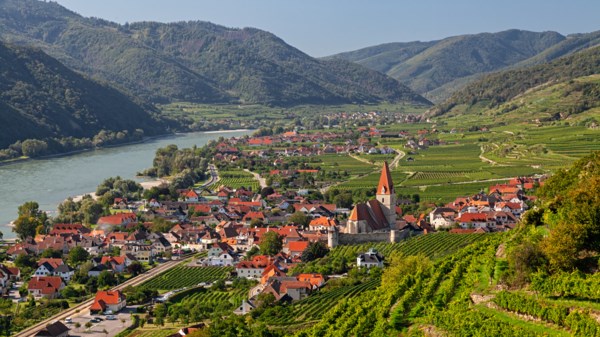
Awaken to the spectacular scenery of the Wachau Valley, one of the most beautiful stretches of river landscape in all of Europe. Named for its white church, Weissenkirchen may very well be the prettiest village in the Wachau Valley. A local expert will show you around and introduce you to some regional delicacies, including a wine tasting. Prefer to go for baroque? Visit the 900-year-old Melk Abbey and its extraordinarily opulent library. Later, you can stretch your legs with a vineyard hike.
If you're up for a hike, join a group on a hike up through the vineyards. A stairway at the church will...
Read More
If you're up for a hike, join a group on a hike up through the vineyards. A stairway at the church will take you past the ancient cemetery and up to the hiking trail that leads through the vineyards planted with Riesling and Grüner Veltliner grapes. You'll enjoy expansive views over the river valley as you approach your resting point. An easy walk back to the ship; instead of a reverse hike, you can comfortably stroll back into the village via a different route, passing many small vintners along the way.
You’ve seen the apricot orchards along the river banks; now taste the fruit. Begin with an easy...
Read More
You’ve seen the apricot orchards along the river banks; now taste the fruit. Begin with an easy walk to Weissenkirchen, which may be the prettiest village in the Wachau—and that’s saying quite a bit. Named for its famous white church, Weissenkirchen is simply picture-perfect. Its centuries-old wine estates, houses with colorful flower boxes, lovely gardens, and apricot orchards make for a wonderfully idyllic setting between the river and the mountains. Later, sample some Wachau wines at a local winery where your guide will share various details about why these extraordinary wines are so unique.
The Babenbergs, a great medieval ducal family that controlled a wide swath of Austria before yielding to ...
Read More
The Babenbergs, a great medieval ducal family that controlled a wide swath of Austria before yielding to the Habsburgs, were the first to erect a castle on the hill above Melk, which they subsequently gave to Benedictine monks. These monks, some 900 years ago, turned it into a fortified abbey and the greatest center of learning in Central Europe. Their library was celebrated far and wide (and still is—Umberto Eco paid tribute to it in his best-selling novel The Name of the Rose). Monks there created more than 1,200 manuscripts, sometimes spending an entire lifetime hand-lettering a single volume. Today the library contains some 100,000 volumes, among them more than 80,000 works printed before 1800. This beautiful complex, completely redone in the early 18th century, is a wonderful example of baroque art and architecture, and the views from its terrace are spectacular. As you walk through the abbey’s Marble Hall with your guide, look up at the ceiling fresco painted by Paul Troger: Those classical gods and goddesses represent Holy Roman Emperor Charles VI, allegorically bringing his people from darkness to light and demonstrating the link he claimed to the original Roman Empire.
Day 6
Passau
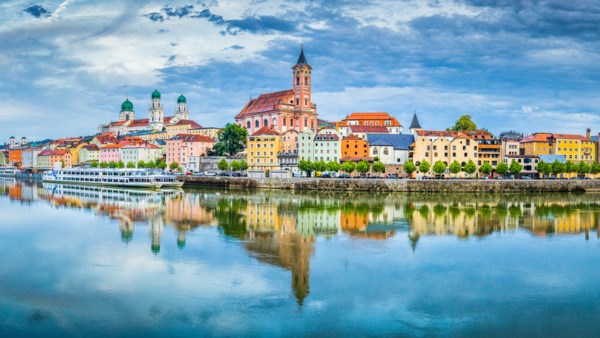
Just before reaching Passau, the ship will pass through the famous Schlögener Schlinge—a “gooseneck” or hairpin turn in the Danube. Located at the confluence of three rivers—the Danube, Inn, and Ilz— Passau is well known for its ornate baroque cathedral. Today, the city is unusually well preserved, having been spared the brunt of Allied bombing during WWII, as you’ll see on your walking tour.
The skyline of Passau is dominated by two buildings that owe their existence to the prince-bishops who...
Read More
The skyline of Passau is dominated by two buildings that owe their existence to the prince-bishops who ruled the city until 1803: the great fortress looming on a hill above the three rivers, home to the bishops until the 17th century, and the green onion domes of St. Stephen’s Cathedral. As you walk through the cobblestone streets toward those green onion domes, you’ll realize that Passau retains the layout of the medieval town.
However, many of the wooden medieval buildings burned to the ground in the 17th century, and the prince-bishops imported Italian artists to build a new cathedral and a magnificent new residence for the bishops themselves. As a result, these splendid structures flaunt Italian baroque and rococo style and ornamentation, complete with opulent gilding and wonderful frescoes. Your guide will introduce you to some of the architectural highlights—the rococo stairways of the New Residence; the cathedral; and the Town Hall, which boasts a magnificent atrium adorned with large paintings by Ferdinand Wagner—and make sure you get a close-up view of the point where the three rivers meet.
The Inn River rises in the Alps, near Innsbruck (hence the name of the famous Swiss ski resort) and...
Read More
The Inn River rises in the Alps, near Innsbruck (hence the name of the famous Swiss ski resort) and flows through three nations (Switzerland, Austria, and Germany) on its way to Passau, where it joins the Danube. While the Danube bike path may be Europe’s best-known route for bicyclists, the Inn River bike path, which follows the river from Innsbruck to Passau, has plenty of fans. The route through the Inn River valley outside Passau is an especially attractive stretch, with great views of the lovely countryside, picturesque villages, and the sparkling clear river itself. Your guide will make sure you know the local traffic and safety rules before you and your group set out along the partly flat and paved path. You’ll be traveling on both sides of the river, crossing between Germany and Austria as you cross the Inn, and your journey will include a comfort stop before returning to the ship. All in all, it’s an idyllic way to enjoy the scenery and get some exercise at the same time.
Masterpiece Collection · $70 per person
Read More
$70 per person / €60 EUR onboard
Immerse yourself in the history and culture of Passau on a tour that will show you the sites, tastes, smells and hidden corners that locals have enjoyed for centuries. Chat with a pub owner of a beer, mingle with a local artist, sample handmade chocolates, schnapps and more on this exciting expedition through this beloved destination.
Intermediate
*Masterpiece Collection are optional experiences that go above and beyond our daily selection of included excursions and can be booked for an additional fee. Select Masterpiece Collection Optional Experiences can be pre-booked. Please note that requests to pre-book must be made by calling our Reservations Team no later than 6 days prior to departure and are subject to availability. Some venues are limited in the number of guests they can accommodate. Guests can book onboard (space permitting) and pay in Euros. Pre-booked Masterpiece Collection Optional Experiences are refundable up to 5 days prior to the cruise/tour start date; if inside of 5 days they are non-refundable. Select Masterpiece Collection Optional Experiences require a minimum number of participants and are subject to cancellation (with full refund) if minimum is not met. Masterpiece Collection Optional Experiences are non-commissionable. Prices are subject to change. Masterpiece Collection excursions may not operate if they occur on a holiday or if they require a minimum number of participants and that minimum is not met.
Day 7
Regensburg
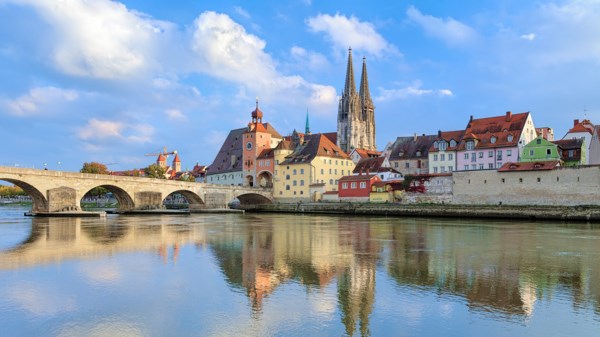
Bavaria’s first capital, Regensburg, owes its impressive historical lineage and rich architectural heritage to 600 years as a Free Imperial City, a fact recognized by UNESCO in 2006. Today, you’ll discover how the beautifully preserved medieval city coexists with a vibrant modern urban center.
People have been describing Regensburg as “old and new” for a thousand years. A single...
Read More
People have been describing Regensburg as “old and new” for a thousand years. A single structure perfectly illustrates this: Porta Praetoria, the gate built by the Romans during Marcus Aurelius’ reign. The gate and adjacent watchtower have been incorporated into a much newer building, but the plaster has been removed to reveal the ancient stones laid so long ago.
As you walk through the cobbled lanes of the UNESCO-designated Old Town, the city’s 2,000-year history is similarly revealed: the Stone Bridge that made Regensburg a 12th-century trading powerhouse, the Gothic town hall where the Imperial Diet met for three centuries, the 13th-century fortified patrician houses, and the spectacular Cathedral of St. Peter, whose magnificent 14th-century stained-glass windows alone are worth your walk.
You’ll have free time to explore on your own. It’s very hard to get lost in Regensburg because the spires of the cathedral are visible all over town, so don’t hesitate to roam. The historic quarter not only boasts almost a thousand beautiful old buildings, but also many cozy pubs and some great shopping. The ship is docked conveniently close, so it’s easy to drop your treasures off and go back for more.
Hops vines grow up their strings in a field tower almost twice a person’s height. They’re...
Read More
Hops vines grow up their strings in a field tower almost twice a person’s height. They’re grown for their flowers, which add a distinctive flavor to beer—but the fields they grow in add a distinctive flavor to the hops. You could call it terroir for beer, and you can delve into hops cultivation and hops brewing today. Travel through Bavaria’s Holledau region, the largest hops growing district in the world, and meet an enthusiastic ambassador of hops growing and beer making. She will give you a quick and lively history of hops in Germany—including Bavaria’s law governing the making of beer, which has specified since 1560 that the only ingredients permitted in beer are water, barley and hops—and lead you on a tour through the growing fields her family owns, followed by a craft beer tasting in the cozy barn turned beer hall. It’s a delicious way to get to know a fascinating aspect of the international farm-to-table movement.
Day 8
Nuremberg
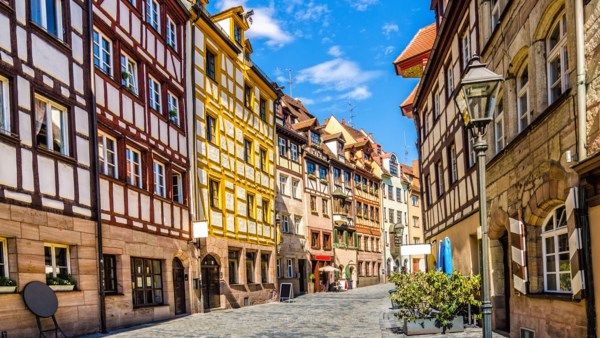
Arrive in the archetypal medieval German city of Nuremberg. Nuremberg is justifiably famous for its gingerbread and pocket watches, and it was also the site of some key moments in 20th-century history. You’ll choose between two memorable ways of exploring this exceptional city. You can join a tour of a secret Nazi art bunker hidden underground, or you can accompany a local expert to the city’s most important WWII sites, including the enormous Nazi Party Rally Grounds—the actual site of the Nazi Party rallies.
Onboard: This morning, head up to the top deck or find a seat with a good view—you won’t want to miss seeing the ship navigate its way through a marvel of modern engineering, the Main-Danube Canal. A formidable set of locks, 16 in all, lifts your ship to the crest of the European “continental divide.”
Hitler considered Nuremberg the perfect expression of German culture (partly because of its significance ...
Read More
Hitler considered Nuremberg the perfect expression of German culture (partly because of its significance in the Holy Roman Empire, which he called the First Reich), and so beginning in 1927, he chose to hold his massive rallies in the city. By 1933, his favorite architect, Albert Speer, had designed the vast Nazi Party Rally Grounds, where thousands upon thousands of Nazi troops saluted Hitler. (Leni Riefenstahl captured these events in her famous propaganda film Triumph of the Will.) Not all of Speer’s plans were executed, and some of his grandiose structures were bombed out of existence, but the remainder stand as vivid testimony to Hitler’s megalomania. A four-square-mile (10-square-kilometer) complex known as Zeppelin Fields contains parade grounds and a huge grandstand, the excavation site where a stadium for 400,000 people was begun—the hole is now filled with water.
Set out on a panoramic drive towards Nuremberg’s Old Town. Along the way, look out the window to...
Read More
Set out on a panoramic drive towards Nuremberg’s Old Town. Along the way, look out the window to catch a glimpse of several interesting sites, including the former SS Barracks, Nuremberg’s train station, and the old city walls. You’ll get off the bus near the castle for a walking tour of the historic neighborhood surrounding it, then descend underground to find a secret Nazi art bunker hidden beneath the castle.
In the medieval period, a network of tunnels was built under the castle hill, and parts of these tunnels were later turned into an artifact preservation bunker during World War II. The Nazis stored several highly valuable and symbolic items here to keep them safe from Allied air raids, including the imperial regalia of the Holy Roman Empire, looted artifacts from occupied nations, and paintings by Albrecht Dürer, a German painter whose home you’ll have passed on your tour through the Old Town.
Please note: you may find it beneficial to bring a warm jacket with you on this tour, as the art bunker naturally sits at around 55°C.
Day 9
Bamberg
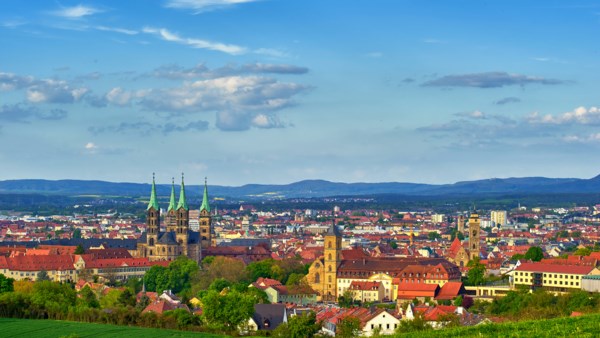
Your floating boutique hotel takes you to Bamberg today, a well-preserved town that offers a fascinating glimpse of medieval times. Explore the city on foot or opt to head deeper into the Franconian countryside to experience an authentic slice of rural life—including a tractor ride. Like Rome, the city is built on seven hills—but in Bamberg, a church tops each one.
You’ll spend the rest of the day on the peaceful Main River, cruising past quiet Franconian hamlets and picturesque countryside. It’s the perfect time to indulge in the many comforts of your luxury ship while watching some of Europe’s loveliest scenery glide by.
Now a pleasant city with a lively student population and a world-famous symphony orchestra, Bamberg was...
Read More
Now a pleasant city with a lively student population and a world-famous symphony orchestra, Bamberg was the center of economic and political life for a huge swath of Central Europe in the Middle Ages. Spared WWII bombing, the entire heart of historic Bamberg is a UNESCO World Heritage Site. The medieval layout of the city remains intact, along with 2,000 historic buildings; it is yours to explore today. In the splendid late- Romanesque Imperial Cathedral you will find the only papal tomb in Germany, that of Pope Clement II (who was the bishop of Bamberg before he became pope), as well as the tomb of Emperor Henry II (who established the bishopric). Near it is the magnificent Old Palace, the late-Gothic imperial residence (if you saw the 2011 3-D version of The Three Musketeers, you’ll recognize it immediately), which sits across from the New Residence, where the 17th-century prince-bishops lived, separated by a lovely rose garden. Cross the cobblestone footbridge to the Old Town Hall, which is adorned with colorful frescoes, and ramble along the narrow lanes lined with picturesque half-timbered houses.
If you’re interested in getting to know more about the landscape and local farming techniques in...
Read More
If you’re interested in getting to know more about the landscape and local farming techniques in the beautiful Steigerwald region, this visit to a Franconian village is perfect for you. Meet a local farmer who is determined to make sure that his way of life continues for future generations; he’s dedicated to restoring the natural environment around him and making sure that school kids know more about where their food comes from. Join him as he introduces his village to you: the typical farmhouses and the crops, the hardships of the life as well as the pleasures of living among the vineyards and forests. Take a tractor ride over the rolling hills to a small-scale vintner’s where you can sample the wine they make strictly for home consumption.
Day 10
Würzburg (Rothenburg)
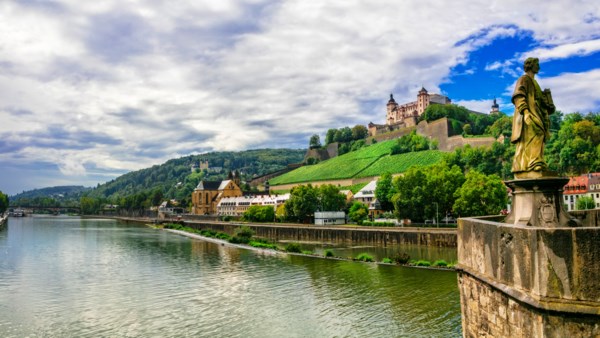
Your ship will dock in the charming Franconian town of Würzburg, where you can visit the extraordinary Würzburg Residence, one of the most opulent baroque palaces in Europe.
Step into a fairytale version of the Middle Ages in Rothenburg with its great stone walls surrounding...
Read More
Step into a fairytale version of the Middle Ages in Rothenburg with its great stone walls surrounding the medieval core, linking towers, bastions, and parapets. Narrow cobblestone lanes will lead you past the charming old monastery, Germany’s oldest half-timbered houses, and splendid fountains before winding your way to the town’s perfectly medieval Market Square, a hotspot for locals and guests alike. If you’re lucky, you’ll get to see magnificent Town Hall (which seamlessly blends together Gothic, Renaissance, and Baroque architecture), spirited dance performances, and on special occasions—knights pulling horses through the city in a wonderful spectacle. Savor a taste of the beloved bratwurst, a type of German sausage made from veal, beef, or pork. Take some time to explore the town and have lunch on your own after your tour. This afternoon, you’ll have a chance to explore or shop on your own.
This incredibly lavish 18th-century palace was created under the auspices of two Schönborn...
Read More
This incredibly lavish 18th-century palace was created under the auspices of two Schönborn prince-bishops, Lothar Franz and Friedrich Carl, who brought enormous knowledge and passion, as well as a budget for the best, to the project. Over the course of 60 years, they fostered the creation of a 300-room palace that contains jaw-dropping baroque art. The magnificent grand staircase boasts the world’s largest ceiling fresco, painted by Giovanni Battista Tiepolo. Portions of the building were damaged by Allied bombing in 1945, but, fortunately, most of the historic furnishings had been stored off-site and key rooms were unharmed, so you can see the original—and matchless—artwork, gilding, and statuary. Check out both the spectacular Hall of Mirrors and the imposing Imperial Hall, which boasts a large oval dome and 20 half-columns. Even the gardens have been restored, right down to the topiary fruit trees in the kitchen garden, which are re-creations of the trees grown there in the 18th century.
Note: Visitors may not take photos or videos or carry backpacks inside the Würzburg Residence.
In the charming town of Eibelstadt, within the Würzburg district, you’ll find Weinforum...
Read More
In the charming town of Eibelstadt, within the Würzburg district, you’ll find Weinforum Franken. This cozy hotel and restaurant in Franconian wine country is a haven for wine lovers, and their sommelier is passionate about sourcing the best wines in the region for their collection. Today, we’ll enjoy an atmospheric tasting in their 15th-century cellar, trying 3 different wines produced by fantastic local estates.
Day 11
Wertheim
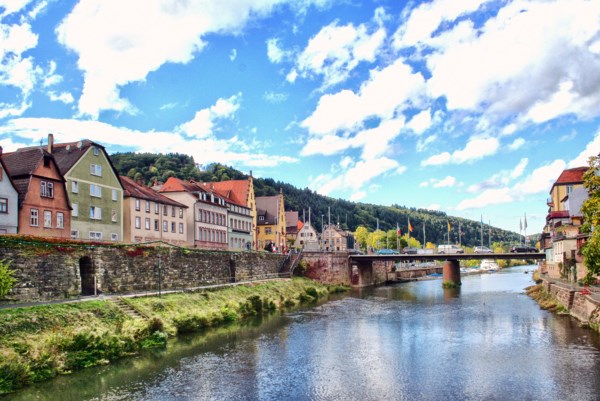
After today, you may never eat a pretzel again without thinking of the town of Wertheim. You’ll meet one of Germany’s best pretzel makers, as well as the owner of a historic wine estate. If you’re more in the mood for a scenic hike, you are welcome to do that as well.
This region of Bavaria is known for its amber-colored beer, spicy bratwurst, traditional soft pretzels,...
Read More
This region of Bavaria is known for its amber-colored beer, spicy bratwurst, traditional soft pretzels, and unique wine bottles with short necks and round bodies—and you’ll encounter several of these local specialties today. First, though, you get to see a little of Wertheim itself. Despite centuries of flooding, a great deal of the Old Town remains. The Pointed Tower, used as a jail for drunkards and shrews in the 13th century, leans toward its neighbors, not from age but because flood waters have undermined it. It’s not the only architectural wonder you’ll see on your tour. You may choose to spend some leisure time in the village or head straight to nearby Kreuzwertheim, a wine-growing area, for a hike through the vineyards—your efforts will be rewarded with a glass of sparkling wine and a wonderful view of the Main River valley. Whichever option you select, your next stop is a historic winery that produces Franconian wines. Its charming sandstone architecture, vaulted cellars, and covered courtyard make for a delightful afternoon. You’ve probably tasted some yummy soft pretzels on your trip already, but these are special: Watch a fifth-generation baker make some for you and discover for yourself why he supplies some of Berlin’s top hotels. Then meet the winery’s winemaker, who will present a special wine tasting.
Day 12
Frankfurt (Heidelberg)
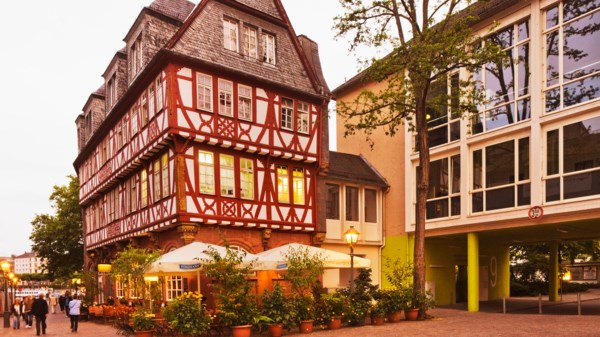
Frankfurt is known as the “Mainhattan” of Europe due to its profusion of bankers and soaring skyscrapers, which coexist with the city’s traditional Old Town architecture. Choose a brief tour that gives you an overview of this major European financial and trade center. Alternatively, visit romantic Heidelberg and its Renaissance castle.
Meet your local guide outside the ship and get ready for a tasting tour of Frankfurt. Enjoy some iconic...
Read More
Meet your local guide outside the ship and get ready for a tasting tour of Frankfurt. Enjoy some iconic favorites, such as grüne sosse—a refreshing herb sauce—frankfurters, and apple wine as you make your way to the Hauptwache. This central plaza is full of places to shop and eat, so you may want to stick around after our tour.
Walk up a cobblestone incline to Heidelberg Castle, where you’ll have a guided tour of the...
Read More
Walk up a cobblestone incline to Heidelberg Castle, where you’ll have a guided tour of the courtyard and the Heidelberg Tun—the world’s largest wine barrel. The views from the hilltop castle ruins, which greatly inspired writers and artists of the Romantic era, are simply spectacular. Later, enjoy a leisurely lunch on your own and explore the culinary treasures and charming shops in town before boarding the coach back to your ship.
Note: lunch is not included with this excursion.
Day 13
Rüdesheim
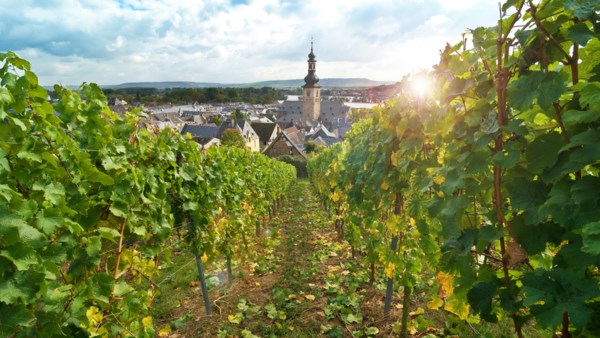
Experience Germany’s fabled Rheingau in one of two ways today. Take in spectacular views of the region from the Rüdesheim mini-train, or venture within an atmospheric medieval monastery and taste the Rieslings made on site. The town is best known for its narrow avenue of shops and wine bars called the Drosselgasse. Experience the most spectacular scenery on the Rhine later in the afternoon as you cruise past the famous Middle Rhine Valley.
Board a little train for a charming ride through Rüdesheim. The train will pick you up outside the...
Read More
Board a little train for a charming ride through Rüdesheim. The train will pick you up outside the ship and begin a comprehensive drive through town, passing the famous Drosselgasse and other must-see sights along the way. Take note of your favorite spots as you go, because you’ll have free time to explore on your own at the end of the ride.
Kloster Eberbach is a former Cistercian monastery built in the Romanesque and early Gothic style, and is ...
Read More
Kloster Eberbach is a former Cistercian monastery built in the Romanesque and early Gothic style, and is considered one of the most significant architectural sites in the region. In fact, some of the interior scenes of the 1986 movie The Name of the Rose—based on the best-selling novel by Umberto Eco—were filmed here. You’ll have a guided tour of the monastery followed by a tasting of locally grown Rieslings.
Day 14
Cologne
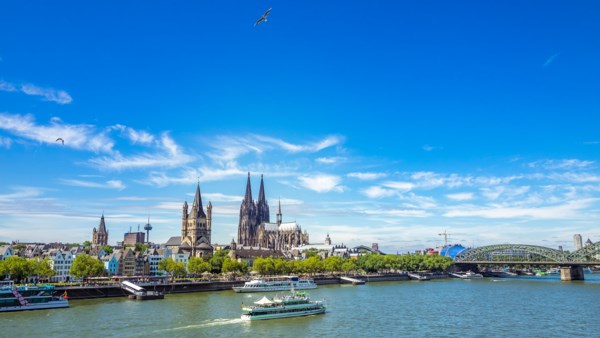
Enjoy a delightful tour of Cologne’s Old Town, where three medieval gates remain standing, as does the old city hall with its stunning Renaissance façade. Wander through the historical center and take in its charming atmosphere and narrow alleyways flanked by old houses. No matter how you choose to explore Old Town, you’ll also have ample free time to explore the city on your own.
Follow your guide around some of the most popular sites of Cologne, the largest city on the Rhine....
Read More
Follow your guide around some of the most popular sites of Cologne, the largest city on the Rhine. You’ll pass the old fish market, City Hall with its Renaissance façade, and the old Jewish mikvah (a bath used for ritual cleansing).
Meander through the narrow, cobbled lanes of Old Town, lined with traditional houses in every color and a plethora of restaurants and pubs. One of the city’s 12 Romanesque churches provides a castle-like backdrop to this quaint, riverside quarter of Cologne.
Your local expert will take you all the way to the Domplatte, the square where you’ll find the Cologne Cathedral. Should you wish, you can head inside this Gothic building on your own to see the Shrine of the Magi and the beautiful stained-glass windows. Otherwise, try asking your guide for tips on what to explore. Whatever your interests, our local expert knows all the best spots in town!
Day 15
Amsterdam (Disembark)
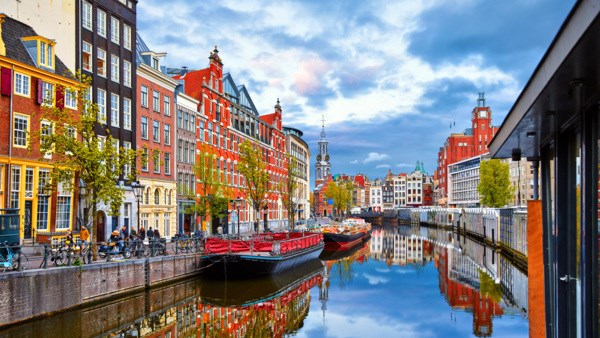
Disembark the ship. If you have arranged a Uniworld departure transfer, you will be transferred to Amsterdam Airport Schiphol for your flight home.
Optional, Amsterdam Post-Cruise Extension
Optional, Amsterdam Pre-Cruise Extension
Day 1
Amsterdam (Embark)
Arrive at Amsterdam Airport Schiphol. If you have arranged a Uniworld arrival transfer, you will be greeted by a Uniworld representative and transferred to the ship.
Day 2
Cologne
Enjoy a delightful tour of Cologne’s Old Town, where three medieval gates remain standing, as does the old city hall with its stunning Renaissance façade. Wander through the historical center and take in its charming atmosphere and narrow alleyways flanked by old houses. No matter how you choose to explore Old Town, you’ll also have ample free time to explore the city on your own.
In the evening, a special Captain’s Welcome Reception and Dinner will be prepared for you.
Follow your guide around some of the most popular sites of Cologne, the largest city on the Rhine....
Read More
Follow your guide around some of the most popular sites of Cologne, the largest city on the Rhine. You’ll pass the old fish market, City Hall with its Renaissance façade, and the old Jewish mikvah (a bath used for ritual cleansing).
Meander through the narrow, cobbled lanes of Old Town, lined with traditional houses in every color and a plethora of restaurants and pubs. One of the city’s 12 Romanesque churches provides a castle-like backdrop to this quaint, riverside quarter of Cologne.
Your local expert will take you all the way to the Domplatte, the square where you’ll find the Cologne Cathedral. Should you wish, you can head inside this Gothic building on your own to see the Shrine of the Magi and the beautiful stained-glass windows. Otherwise, try asking your guide for tips on what to explore. Whatever your interests, our local expert knows all the best spots in town!
Day 3
Rüdesheim
Experience the most spectacular scenery on the Rhine this morning as you cruise past the famous Middle Rhine Valley. Later, experience Germany’s fabled Rheingau in one of two ways today. Take in spectacular views of the region from the Rüdesheim mini-train, or venture within an atmospheric medieval monastery and taste the Rieslings made on site. Like many cities along the Rhine, Rüdesheim has a lengthy history that stretches back to Roman times. These days, the town is best known for its narrow avenue of shops and wine bars called the Drosselgasse and its impressive Niederwald Monument.
Board a little train for a charming ride through Rüdesheim. The train will pick you up outside the...
Read More
Board a little train for a charming ride through Rüdesheim. The train will pick you up outside the ship and begin a comprehensive drive through town, passing the famous Drosselgasse and other must-see sights along the way. Take note of your favorite spots as you go, because you’ll have free time to explore on your own at the end of the ride.
Kloster Eberbach is a former Cistercian monastery built in the Romanesque and early Gothic style, and is ...
Read More
Kloster Eberbach is a former Cistercian monastery built in the Romanesque and early Gothic style, and is considered one of the most significant architectural sites in the region. In fact, some of the interior scenes of the 1986 movie The Name of the Rose—based on the best-selling novel by Umberto Eco—were filmed here. You’ll have a guided tour of the monastery followed by a tasting of locally grown Rieslings.
Day 4
Frankfurt (Heidelberg)
Vibrant Frankfurt, often referred to as the “Mainhattan” of Europe, boasts world-class museums, soaring skyscrapers, cozy wine taverns and lovely parks. Choose a brief tour that gives you an overview of this major European financial and trade center. Alternatively, visit romantic Heidelberg and its Renaissance castle.
Meet your local guide outside the ship and get ready for a tasting tour of Frankfurt. Enjoy some iconic...
Read More
Meet your local guide outside the ship and get ready for a tasting tour of Frankfurt. Enjoy some iconic favorites, such as grüne sosse—a refreshing herb sauce—frankfurters, and apple wine as you make your way to the Hauptwache. This central plaza is full of places to shop and eat, so you may want to stick around after our tour.
Walk up a cobblestone incline to Heidelberg Castle, where you’ll have a guided tour of the...
Read More
Walk up a cobblestone incline to Heidelberg Castle, where you’ll have a guided tour of the courtyard and the Heidelberg Tun—the world’s largest wine barrel. The views from the hilltop castle ruins, which greatly inspired writers and artists of the Romantic era, are simply spectacular. Later, enjoy a leisurely lunch and explore the culinary treasures and charming shops in town before boarding the coach back to your ship.
Note: lunch is not included with this excursion.
Day 5
Wertheim
After today, you may never eat a pretzel again without thinking of the town of Wertheim. You’ll meet one of Germany’s best pretzel makers, as well as the owner of a historic wine estate. If you’re more in the mood for a scenic hike, you are welcome to do that as well.
This region of Bavaria is known for its amber-colored beer, spicy bratwurst, traditional soft pretzels,...
Read More
This region of Bavaria is known for its amber-colored beer, spicy bratwurst, traditional soft pretzels, and unique wine bottles with short necks and round bodies—and you’ll encounter several of these local specialties today. First, though, you get to see a little of Wertheim itself. Despite centuries of flooding, a great deal of the Old Town remains. The Pointed Tower, used as a jail for drunkards and shrews in the 13th century, leans toward its neighbors, not from age but because flood waters have undermined it. It’s not the only architectural wonder you’ll see on your tour. You may choose to spend some leisure time in the village or head straight to nearby Kreuzwertheim, a wine-growing area, for a hike through the vineyards—your efforts will be rewarded with a glass of sparkling wine and a wonderful view of the Main River valley. Whichever option you select, your next stop is a historic winery that produces Franconian wines. Its charming sandstone architecture, vaulted cellars, and covered courtyard make for a delightful afternoon. You’ve probably tasted some yummy soft pretzels on your trip already, but these are special: Watch a fifth-generation baker make some for you and discover for yourself why he supplies some of Berlin’s top hotels. Then meet the winery’s winemaker, who will present a special wine tasting.
Day 6
Würzburg
Your ship will dock in the charming Franconian town of Würzburg, where you can visit the extraordinary Würzburg Residence, one of the most opulent baroque palaces in Europe.
This incredibly lavish 18th-century palace was created under the auspices of two Schönborn...
Read More
This incredibly lavish 18th-century palace was created under the auspices of two Schönborn prince-bishops, Lothar Franz and Friedrich Carl, who brought enormous knowledge and passion, as well as a budget for the best, to the project. Over the course of 60 years, they fostered the creation of a 300-room palace that contains jaw-dropping baroque art. The magnificent grand staircase boasts the world’s largest ceiling fresco, painted by Giovanni Battista Tiepolo. Portions of the building were damaged by Allied bombing in 1945, but, fortunately, most of the historic furnishings had been stored off-site and key rooms were unharmed, so you can see the original—and matchless—artwork, gilding, and statuary. Check out both the spectacular Hall of Mirrors and the imposing Imperial Hall, which boasts a large oval dome and 20 half-columns. Even the gardens have been restored, right down to the topiary fruit trees in the kitchen garden, which are re-creations of the trees grown there in the 18th century.
Note: Visitors may not take photos or videos or carry backpacks inside the Würzburg Residence.
In the charming town of Eibelstadt, within the Würzburg district, you’ll find Weinforum...
Read More
In the charming town of Eibelstadt, within the Würzburg district, you’ll find Weinforum Franken. This cozy hotel and restaurant in Franconian wine country is a haven for wine lovers, and their sommelier is passionate about sourcing the best wines in the region for their collection. Today, we’ll enjoy an atmospheric tasting in their 15th-century cellar, trying 3 different wines produced by fantastic local estates.
Day 7
Cruising the Main River, Kitzingen (Rothenburg)
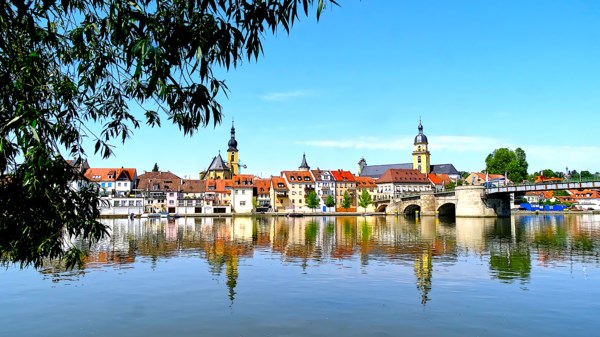
Step into a fairytale version of the Middle Ages in Rothenburg and visit a medieval castle that’s been described as a miniature Versailles. Spend a relaxing day onboard as your ship wends its way along the Main River between Würzburg and Bamberg. It’s something of a truism to say that this route takes you from wine to beer, and you’ll see the transition as you sail past the vineyard-covered slopes around Würzburg toward Bavaria’s famous beer-brewing center, Bamberg. Along the way, you’ll pass delightful little villages and romantic castle ruins, drift under lovely old bridges, and have plenty of time to observe the fascinating variety of vessels plying the river, from heavily loaded barges to jaunty little pleasure craft.
Step into a fairytale version of the Middle Ages in Rothenburg with its great stone walls surrounding...
Read More
Step into a fairytale version of the Middle Ages in Rothenburg with its great stone walls surrounding the medieval core, linking towers, bastions, and parapets. Narrow cobblestone lanes will lead you past the charming old monastery, Germany’s oldest half-timbered houses, and splendid fountains before winding your way to the town’s perfectly medieval Market Square, a hotspot for locals and guests alike. If you’re lucky, you’ll get to see magnificent Town Hall (which seamlessly blends together Gothic, Renaissance, and Baroque architecture), spirited dance performances, and on special occasions—knights pulling horses through the city in a wonderful spectacle. Savor a taste of the beloved bratwurst, a type of German sausage made from veal, beef, or pork. Take some time to explore the town and have lunch on your own after your tour. This afternoon, you’ll have a chance to explore or shop on your own.
Masterpiece Collection · $35 per person
Read More
$35 per person / €30 EUR onboard
Everything about this excursion is wonderfully scenic, starting with your journey from the ship to the town--you'll travel along an especially picturesque stretch of Germany's Romantic Road, which is dotted with enchanting little villages. And the moment you enter Rothenburg, you'll feel as though you are in a fairy tale, partly because Rothenburg has appeared in so many movies, including Harry Potter and the Deathly Hallows. For a great view of the old town, take the narrow path atop the great stone walls that still surround the medieval core; they still link watchtowers, bastions and parapets. Roam the cobblestone streets with your guide, passing historic churches and picture-perfect timber-frame houses to the medieval market square, where you can sample some local sausages before delving into the old dungeon. The vaults there now offer exhibits on the Thirty Years War, which hit Rothenburg hard, though in the 15th century debtors and tax evaders--and one of the town's most famous mayors--were imprisoned there. Take some time to explore the town and have lunch on your own after your tour. It offers everything from a fascinating and gruesome Crime Museum to a terrific year-round Christmas store. Note: lunch will be on your own today.
Intermediate
*Masterpiece Collection are optional experiences that go above and beyond our daily selection of included excursions and can be booked for an additional fee. Select Masterpiece Collection Optional Experiences can be pre-booked. Please note that requests to pre-book must be made by calling our Reservations Team no later than 6 days prior to departure and are subject to availability. Some venues are limited in the number of guests they can accommodate. Guests can book onboard (space permitting) and pay in Euros. Pre-booked Masterpiece Collection Optional Experiences are refundable up to 5 days prior to the cruise/tour start date; if inside of 5 days they are non-refundable. Select Masterpiece Collection Optional Experiences require a minimum number of participants and are subject to cancellation (with full refund) if minimum is not met. Masterpiece Collection Optional Experiences are non-commissionable. Prices are subject to change. Masterpiece Collection excursions may not operate if they occur on a holiday or if they require a minimum number of participants and that minimum is not met.
Day 8
Bamberg
Your floating boutique hotel takes you to Bamberg today, a well-preserved town that offers a fascinating glimpse of medieval times. Explore the city on foot or opt to head deeper into the Franconian countryside to experience an authentic slice of rural life—including a tractor ride. Like Rome, the city is built on seven hills—but in Bamberg, a church tops each one.
You’ll spend the rest of the day on the peaceful Main River, cruising past quiet Franconian hamlets and picturesque countryside. It’s the perfect time to indulge in the many comforts of your luxury ship while watching some of Europe’s loveliest scenery glide by.
Now a pleasant city with a lively student population and a world-famous symphony orchestra, Bamberg was...
Read More
Now a pleasant city with a lively student population and a world-famous symphony orchestra, Bamberg was the center of economic and political life for a huge swath of Central Europe in the Middle Ages. Spared WWII bombing, the entire heart of historic Bamberg is a UNESCO World Heritage Site. The medieval layout of the city remains intact, along with 2,000 historic buildings; it is yours to explore today. In the splendid late- Romanesque Imperial Cathedral you will find the only papal tomb in Germany, that of Pope Clement II (who was the bishop of Bamberg before he became pope), as well as the tomb of Emperor Henry II (who established the bishopric). Near it is the magnificent Old Palace, the late-Gothic imperial residence (if you saw the 2011 3-D version of The Three Musketeers, you’ll recognize it immediately), which sits across from the New Residence, where the 17th-century prince-bishops lived, separated by a lovely rose garden. Cross the cobblestone footbridge to the Old Town Hall, which is adorned with colorful frescoes, and ramble along the narrow lanes lined with picturesque half-timbered houses.
If you’re interested in getting to know more about the landscape and local farming techniques in...
Read More
If you’re interested in getting to know more about the landscape and local farming techniques in the beautiful Steigerwald region, this visit to a Franconian village is perfect for you. Meet a local farmer who is determined to make sure that his way of life continues for future generations; he’s dedicated to restoring the natural environment around him and making sure that school kids know more about where their food comes from. Join him as he introduces his village to you: the typical farmhouses and the crops, the hardships of the life as well as the pleasures of living among the vineyards and forests. Take a tractor ride over the rolling hills to a small-scale vintner’s where you can sample the wine they make strictly for home consumption.
Day 9
Nuremberg, Cruising the Main-Danube Canal
Head up to the top deck or find a seat with a good view—you won’t want to miss seeing the ship navigate its way through a marvel of modern engineering, the Main-Danube Canal. A formidable set of locks, 16 in all, lifts your ship to the crest of the European “continental divide.” Arrive in the archetypal medieval German city of Nuremberg. Nuremberg is justifiably famous for its gingerbread and pocket watches, and it was also the site of some key moments in 20th-century history. You’ll choose between two memorable ways of exploring this exceptional city. You can join a tour of a secret Nazi art bunker hidden underground, or you can accompany a local expert to the city’s most important WWII sites, including the enormous Nazi Party Rally Grounds—the actual site of the Nazi Party rallies.
Hitler considered Nuremberg the perfect expression of German culture (partly because of its significance ...
Read More
Hitler considered Nuremberg the perfect expression of German culture (partly because of its significance in the Holy Roman Empire, which he called the First Reich), and so beginning in 1927, he chose to hold his massive rallies in the city. By 1933, his favorite architect, Albert Speer, had designed the vast Nazi Party Rally Grounds, where thousands upon thousands of Nazi troops saluted Hitler. (Leni Riefenstahl captured these events in her famous propaganda film Triumph of the Will.) Not all of Speer’s plans were executed, and some of his grandiose structures were bombed out of existence, but the remainder stand as vivid testimony to Hitler’s megalomania. A four-square-mile (10-square-kilometer) complex known as Zeppelin Fields contains parade grounds and a huge grandstand, the excavation site where a stadium for 400,000 people was begun—the hole is now filled with water.
Set out on a panoramic drive towards Nuremberg’s Old Town. Along the way, look out the window to...
Read More
Set out on a panoramic drive towards Nuremberg’s Old Town. Along the way, look out the window to catch a glimpse of several interesting sites, including the former SS Barracks, Nuremberg’s train station, and the old city walls. You’ll get off the bus near the castle for a walking tour of the historic neighborhood surrounding it, then descend underground to find a secret Nazi art bunker hidden beneath the castle.
In the medieval period, a network of tunnels was built under the castle hill, and parts of these tunnels were later turned into an artifact preservation bunker during World War II. The Nazis stored several highly valuable and symbolic items here to keep them safe from Allied air raids, including the imperial regalia of the Holy Roman Empire, looted artifacts from occupied nations, and paintings by Albrecht Dürer, a German painter whose home you’ll have passed on your tour through the Old Town.
Please note: you may find it beneficial to bring a warm jacket with you on this tour, as the art bunker naturally sits at around 55°C.
Day 10
Regensburg
Bavaria’s first capital, Regensburg, owes its impressive historical lineage and rich architectural heritage to 600 years as a Free Imperial City, a fact recognized by UNESCO in 2006. Today, you’ll discover how the beautifully preserved medieval city coexists with a vibrant modern urban center.
People have been describing Regensburg as “old and new” for a thousand years. A single...
Read More
People have been describing Regensburg as “old and new” for a thousand years. A single structure perfectly illustrates this: Porta Praetoria, the gate built by the Romans during Marcus Aurelius’ reign. The gate and adjacent watchtower have been incorporated into a much newer building, but the plaster has been removed to reveal the ancient stones laid so long ago.
As you walk through the cobbled lanes of the UNESCO-designated Old Town, the city’s 2,000-year history is similarly revealed: the Stone Bridge that made Regensburg a 12th-century trading powerhouse, the Gothic town hall where the Imperial Diet met for three centuries, the 13th-century fortified patrician houses, and the spectacular Cathedral of St. Peter, whose magnificent 14th-century stained-glass windows alone are worth your walk.
You’ll have free time to explore on your own. It’s very hard to get lost in Regensburg because the spires of the cathedral are visible all over town, so don’t hesitate to roam. The historic quarter not only boasts almost a thousand beautiful old buildings, but also many cozy pubs and some great shopping. The ship is docked conveniently close, so it’s easy to drop your treasures off and go back for more.
Hops vines grow up their strings in a field tower almost twice a person’s height. They’re...
Read More
Hops vines grow up their strings in a field tower almost twice a person’s height. They’re grown for their flowers, which add a distinctive flavor to beer—but the fields they grow in add a distinctive flavor to the hops. You could call it terroir for beer, and you can delve into hops cultivation and hops brewing today. Travel through Bavaria’s Holledau region, the largest hops growing district in the world, and meet an enthusiastic ambassador of hops growing and beer making. She will give you a quick and lively history of hops in Germany—including Bavaria’s law governing the making of beer, which has specified since 1560 that the only ingredients permitted in beer are water, barley and hops—and lead you on a tour through the growing fields her family owns, followed by a craft beer tasting in the cozy barn turned beer hall. It’s a delicious way to get to know a fascinating aspect of the international farm-to-table movement.
Masterpiece Collection · $75 per person
Read More
$75 per person / €65 EUR onboard
Just a five-minute walk from where our ship docks in Regensburg is the Haus der Bayrischen Geschichte. Also known as “The Bavarian Museum,” this building houses a plethora of objects of cultural significance to the region, including the lion statue that was at Munich Oktoberfest until 2017, Empress Sisi’s mourning period dress, and a hot air balloon used by some residents of East Germany to flee to West Germany during the cold war. Next, we’ll walk to the other side of the Danube, taking in an incredible view over the city before heading to Stadtamhof Brewery, the oldest in Regensburg. Learn about the 800-year old tradition of beer brewing on a guided tour, followed by a beer tasting on site.
Intermediate
*Masterpiece Collection are optional experiences that go above and beyond our daily selection of included excursions and can be booked for an additional fee. Select Masterpiece Collection Optional Experiences can be pre-booked. Please note that requests to pre-book must be made by calling our Reservations Team no later than 6 days prior to departure and are subject to availability. Some venues are limited in the number of guests they can accommodate. Guests can book onboard (space permitting) and pay in Euros. Pre-booked Masterpiece Collection Optional Experiences are refundable up to 5 days prior to the cruise/tour start date; if inside of 5 days they are non-refundable. Select Masterpiece Collection Optional Experiences require a minimum number of participants and are subject to cancellation (with full refund) if minimum is not met. Masterpiece Collection Optional Experiences are non-commissionable. Prices are subject to change. Masterpiece Collection excursions may not operate if they occur on a holiday or if they require a minimum number of participants and that minimum is not met.
Day 11
Passau
Located at the confluence of three rivers—the Danube, Inn, and Ilz— Passau is well known for its ornate baroque cathedral. Today, the city is unusually well preserved, having been spared the brunt of Allied bombing during WWII, as you’ll see on your walking tour.
The skyline of Passau is dominated by two buildings that owe their existence to the prince-bishops who...
Read More
The skyline of Passau is dominated by two buildings that owe their existence to the prince-bishops who ruled the city until 1803: the great fortress looming on a hill above the three rivers, home to the bishops until the 17th century, and the green onion domes of St. Stephen’s Cathedral. As you walk through the cobblestone streets toward those green onion domes, you’ll realize that Passau retains the layout of the medieval town.
However, many of the wooden medieval buildings burned to the ground in the 17th century, and the prince-bishops imported Italian artists to build a new cathedral and a magnificent new residence for the bishops themselves. As a result, these splendid structures flaunt Italian baroque and rococo style and ornamentation, complete with opulent gilding and wonderful frescoes. Your guide will introduce you to some of the architectural highlights—the rococo stairways of the New Residence; the cathedral; and the Town Hall, which boasts a magnificent atrium adorned with large paintings by Ferdinand Wagner—and make sure you get a close-up view of the point where the three rivers meet.
The Inn River rises in the Alps, near Innsbruck (hence the name of the famous Swiss ski resort) and...
Read More
The Inn River rises in the Alps, near Innsbruck (hence the name of the famous Swiss ski resort) and flows through three nations (Switzerland, Austria, and Germany) on its way to Passau, where it joins the Danube. While the Danube bike path may be Europe’s best-known route for bicyclists, the Inn River bike path, which follows the river from Innsbruck to Passau, has plenty of fans. The route through the Inn River valley outside Passau is an especially attractive stretch, with great views of the lovely countryside, picturesque villages, and the sparkling clear river itself. Your guide will make sure you know the local traffic and safety rules before you and your group set out along the partly flat and paved path. You’ll be traveling on both sides of the river, crossing between Germany and Austria as you cross the Inn, and your journey will include a comfort stop before returning to the ship. All in all, it’s an idyllic way to enjoy the scenery and get some exercise at the same time.
Masterpiece Collection · $70 per person
Read More
$70 per person / €60 EUR onboard
Capture Passau’s best angles—and there are many, believe us—on a guided-tour-turned-photography class! With a photographer by your side, you’ll explore the city’s most scenic sites, from the Old Town Hall to the magnificent St. Stephen’s cathedral, and from charming alleyways to breathtaking riverside views. Bring your camera (don’t worry, any smartphone will do) and learn how the professionals get that perfect shot. This tour will give you an immersive introduction to the city, leaving you with new memories, new skills, and excellent mementos of your trip.
Intermediate
*Masterpiece Collection are optional experiences that go above and beyond our daily selection of included excursions and can be booked for an additional fee. Select Masterpiece Collection Optional Experiences can be pre-booked. Please note that requests to pre-book must be made by calling our Reservations Team no later than 6 days prior to departure and are subject to availability. Some venues are limited in the number of guests they can accommodate. Guests can book onboard (space permitting) and pay in Euros. Pre-booked Masterpiece Collection Optional Experiences are refundable up to 5 days prior to the cruise/tour start date; if inside of 5 days they are non-refundable. Select Masterpiece Collection Optional Experiences require a minimum number of participants and are subject to cancellation (with full refund) if minimum is not met. Masterpiece Collection Optional Experiences are non-commissionable. Prices are subject to change. Masterpiece Collection excursions may not operate if they occur on a holiday or if they require a minimum number of participants and that minimum is not met.
Day 12
Weissenkirchen (Melk), Tulln
Named for its white church, Weissenkirchen may very well be the prettiest village in the Wachau Valley. A local expert will show you around and introduce you to some regional delicacies, including a wine tasting. Prefer to go for baroque? Visit the 900-year-old Melk Abbey and its extraordinarily opulent library. Later, you can stretch your legs with a vineyard hike.
If you're up for a hike, join a group on a hike up through the vineyards. A stairway at the church will...
Read More
If you're up for a hike, join a group on a hike up through the vineyards. A stairway at the church will take you past the ancient cemetery and up to the hiking trail that leads through the vineyards planted with Riesling and Grüner Veltliner grapes. You'll enjoy expansive views over the river valley as you approach your resting point. An easy walk back to the ship; instead of a reverse hike, you can comfortably stroll back into the village via a different route, passing many small vintners along the way.
After dinner onboard, join us on a private visit to a museum and concert venue that offers a deep dive...
Read More
After dinner onboard, join us on a private visit to a museum and concert venue that offers a deep dive into the life and legacy of Johann Strauss II. Composer of “The Blue Danube” and one of Europe’s most celebrated musicians, Strauss represents a vital piece of Viennese culture and history. Begin with an interactive tour of the museum, which employs audio-visual elements to immerse you in the story of Johann Strauss II. Afterward, enjoy a live concert of Strauss compositions.
The Babenbergs, a great medieval ducal family that controlled a wide swath of Austria before yielding to ...
Read More
The Babenbergs, a great medieval ducal family that controlled a wide swath of Austria before yielding to the Habsburgs, were the first to erect a castle on the hill above Melk, which they subsequently gave to Benedictine monks. These monks, some 900 years ago, turned it into a fortified abbey and the greatest center of learning in Central Europe. Their library was celebrated far and wide (and still is—Umberto Eco paid tribute to it in his best-selling novel The Name of the Rose). Monks there created more than 1,200 manuscripts, sometimes spending an entire lifetime hand-lettering a single volume. Today the library contains some 100,000 volumes, among them more than 80,000 works printed before 1800. This beautiful complex, completely redone in the early 18th century, is a wonderful example of baroque art and architecture, and the views from its terrace are spectacular. As you walk through the abbey’s Marble Hall with your guide, look up at the ceiling fresco painted by Paul Troger: Those classical gods and goddesses represent Holy Roman Emperor Charles VI, allegorically bringing his people from darkness to light and demonstrating the link he claimed to the original Roman Empire.
You’ve seen the apricot orchards along the river banks; now taste the fruit. Begin with an easy...
Read More
You’ve seen the apricot orchards along the river banks; now taste the fruit. Begin with an easy walk to Weissenkirchen, which may be the prettiest village in the Wachau—and that’s saying quite a bit. Named for its famous white church, Weissenkirchen is simply picture-perfect. Its centuries-old wine estates, houses with colorful flower boxes, lovely gardens, and apricot orchards make for a wonderfully idyllic setting between the river and the mountains. Later, sample some Wachau wines at a local winery where your guide will share various details about why these extraordinary wines are so unique.
Day 13
Vienna
Vienna is a cultural treasure trove revered for its art and music (and sinfully rich pastries). Embark on a tour of the city's imperial highlights and a visit to Hofburg Palace or a visit to an interactive multimedia experience featuring the work of Mozart.
Ring Street, the great horseshoe-shaped boulevard lined with many of the city’s major...
Read More
Ring Street, the great horseshoe-shaped boulevard lined with many of the city’s major landmarks—Parliament, City Hall, the Vienna State Opera, glorious palaces, and museums—is a mere 150 years old, practically an infant for a city of Vienna’s age. It replaced the walls and fortifications that had protected the city for centuries. Its construction was a testament to confidence, forward-thinking, and grand urban planning, and it resulted in a 50-year building spree. You’ll pass most of these opulent landmarks on your way to the older section of the city, the area the walls once enclosed.
Later, you’ll walk along Kärntner Street, the celebrated pedestrian boulevard that links the State Opera with St. Stephen’s Cathedral, past the elegant shops on the Graben and the Kohlmarkt. The neighborhood offers a lively combination of historic architecture, street performances, shoppers’ delights, and true Viennese atmosphere.
Today's excursion also includes a visit to Hofburg Palace.
Start your tour by following a local guide through Vienna, taking in the city’s most significant...
Read More
Start your tour by following a local guide through Vienna, taking in the city’s most significant sites as you go. You’ll arrive at Mythos Mozart, a multimedia experience that transforms Mozart’s compositions into an immersive piece of art. Make your way through five different rooms, each with a different story to tell in honor of Vienna’s most famous composer.
Masterpiece Collection · $80 per person
Read More
$80 per person / €70 EUR onboard
Our culinary tour starts in a place of great significance to the people of Vienna, a coffee house. Viennese coffee house culture is a hallmark of local history, and even has UNESCO designation. Though the UNESCO designation refers to coffee house culture collectively, rather than a specific location, we’ve selected one of the city’s most traditional spots for enjoying a cup of coffee with a slice of cake. Next, we’ll walk to Graben Square, where we’ll sample homemade breads with an assortment of spreads and beer. And after that, it’s on to the Stephansplatz, the square surrounding the beautiful Saint Stephen’s Cathedral. We’ll stop by one of Vienna’s oldest cellar vaults at a nearby wine shop for an aperitif of a typical Viennese white wine.
Intermediate
*Masterpiece Collection are optional experiences that go above and beyond our daily selection of included excursions and can be booked for an additional fee. Select Masterpiece Collection Optional Experiences can be pre-booked. Please note that requests to pre-book must be made by calling our Reservations Team no later than 6 days prior to departure and are subject to availability. Some venues are limited in the number of guests they can accommodate. Guests can book onboard (space permitting) and pay in Euros. Pre-booked Masterpiece Collection Optional Experiences are refundable up to 5 days prior to the cruise/tour start date; if inside of 5 days they are non-refundable. Select Masterpiece Collection Optional Experiences require a minimum number of participants and are subject to cancellation (with full refund) if minimum is not met. Masterpiece Collection Optional Experiences are non-commissionable. Prices are subject to change. Masterpiece Collection excursions may not operate if they occur on a holiday or if they require a minimum number of participants and that minimum is not met.
Day 14
Budapest
Called the “Queen of the Danube,” in part because of the way the city hugs the banks of the river, Budapest is an enchanting city that vibrantly mixes East and West, medieval and modern. Made up of two parts— Buda (the hills) and Pest (the flatlands)—and divided by the Danube, Hungary’s capital presents an array of architectural styles that reveal its long and varied history. You’ll have two enticing ways to experience the city—a panoramic guided tour aboard a motorcoach with a visit to the Parliament, or discover the Budapest that locals love on a special walking tour of the city’s most important landmarks.
Take in the highlights of Budapest on a panoramic tour down Andrassy Avenue, a bustling promenade lined...
Read More
Take in the highlights of Budapest on a panoramic tour down Andrassy Avenue, a bustling promenade lined with breathtaking Neo-Renaissance architecture. The construction of this street was part of a concerted effort to establish Budapest as a modern metropolis during the 19th century, making the grandeur of these buildings as much a political statement as an artistic one. Today, you can enjoy both the beauty and the history of this UNESCO-designated avenue as you pass through, marvel at Heroes’ Square, and make your way to the top of Gellért Hill, where you’ll look down to incredible views of both the Buda and Pest sides of the city.
Stepping off the coach, you’ll enter the iconic Parliament building that commands Budapest’s skyline. Likely the most famous building in Budapest, this masterpiece of Neo-Gothic architecture is as spectacular inside as out.
Today your guide will show you how to snack around Budapest like a local, starting with a tram ride to...
Read More
Today your guide will show you how to snack around Budapest like a local, starting with a tram ride to the House of Parliament. Hop off the tram and take a short walk to your first treat: a coffee break at the First Strudel House of Pest. Energized by your cup of coffee, you’ll continue your walk down to St. Stephen’s Basilica—a handsome Neo-Classical building that is one of Budapest’s most significant cultural sites.
From there, we’ll head to the Great Market Hall to sample some traditional Hungarian fare, such as salami, sausages, and cheese, while your local expert explains the intricacies of Hungarian cuisine.
Day 15
Budapest (Disembark)
Disembark the ship. If you have arranged a Uniworld departure transfer, you will be transferred to Budapest Ferenc Liszt International Airport for your flight home. Or you can extend your stay in beautiful Budapest with our exciting optional post-cruise extension.
Optional, Budapest Post-Cruise Extension
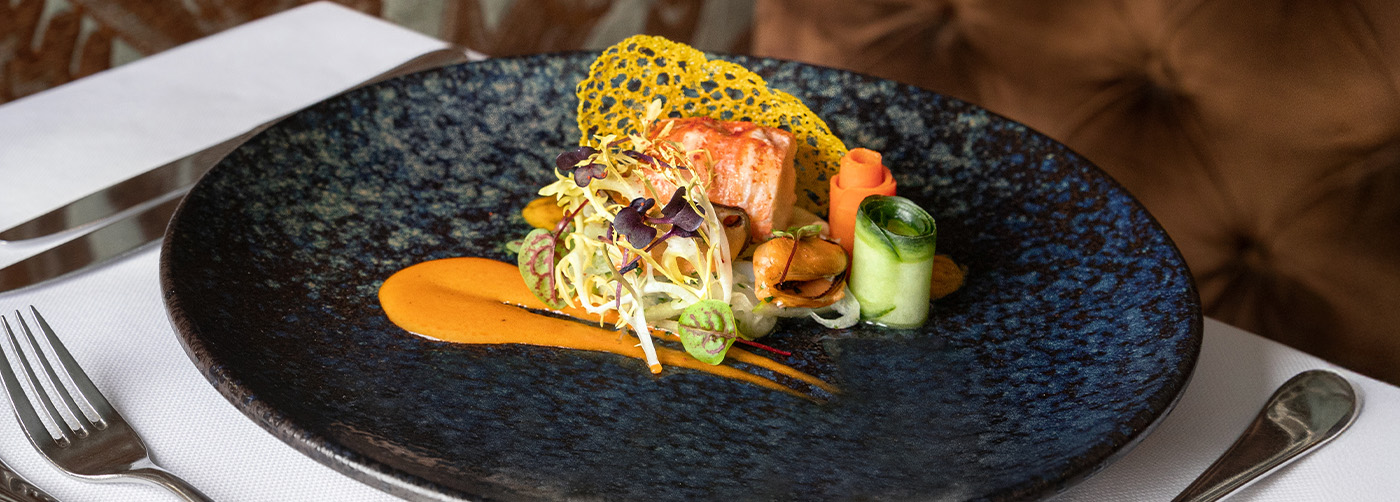
2026 | A cruise for those wanting to experience the quintessential magic of the holidays.
Learn More
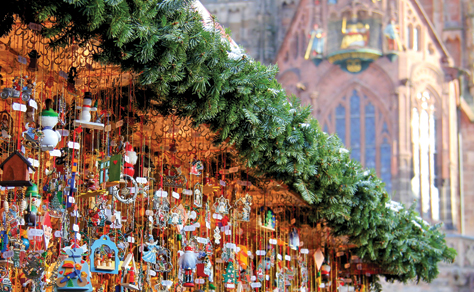
2026 | Experience Europe’s old-world charms during the most magical time of the year.
Learn More
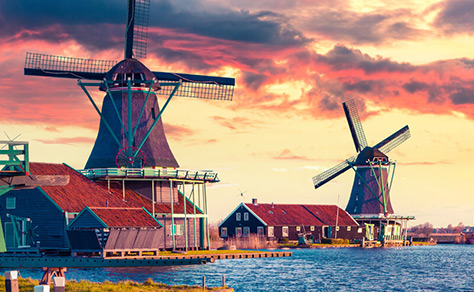
2026 | Explore Europe’s rich history and Jewish heritage on an incredible discovery of the Netherlands, Germany, France, and Switzerland.
Learn More