Rhine, Moselle & Belgium Grand Discovery
15 Days | Basel to Brussels
2028 | Meander your way from Belgium to Switzerland, visiting no less than six different countries along the way.
Learn More
Between the imperial monuments of Vienna and the breathtaking coastline of the Black Sea, the distinct wonders of seven Danube River nations are ready to enchant you. View the gilded works of Gustav Klimt at the Belvedere without the crowds during a private visit. Enjoy a fresh lunch of Croatian favorites at a countryside farm. Uncover the under-the-radar delights of the Eastern European wine industry. Indulge in a relaxing boat ride through the lush environs of the Danube Delta, a UNESCO World Heritage Site and thriving ecosystem—perfect for bird watching and a lunch of locally caught fish. At either end of your blissful river cruise, luxury hotel stays in Vienna and Bucharest await.
Danube East & West is a combination of Empires of the Lower Danube, and Vienna & Capital Cities of the Danube.
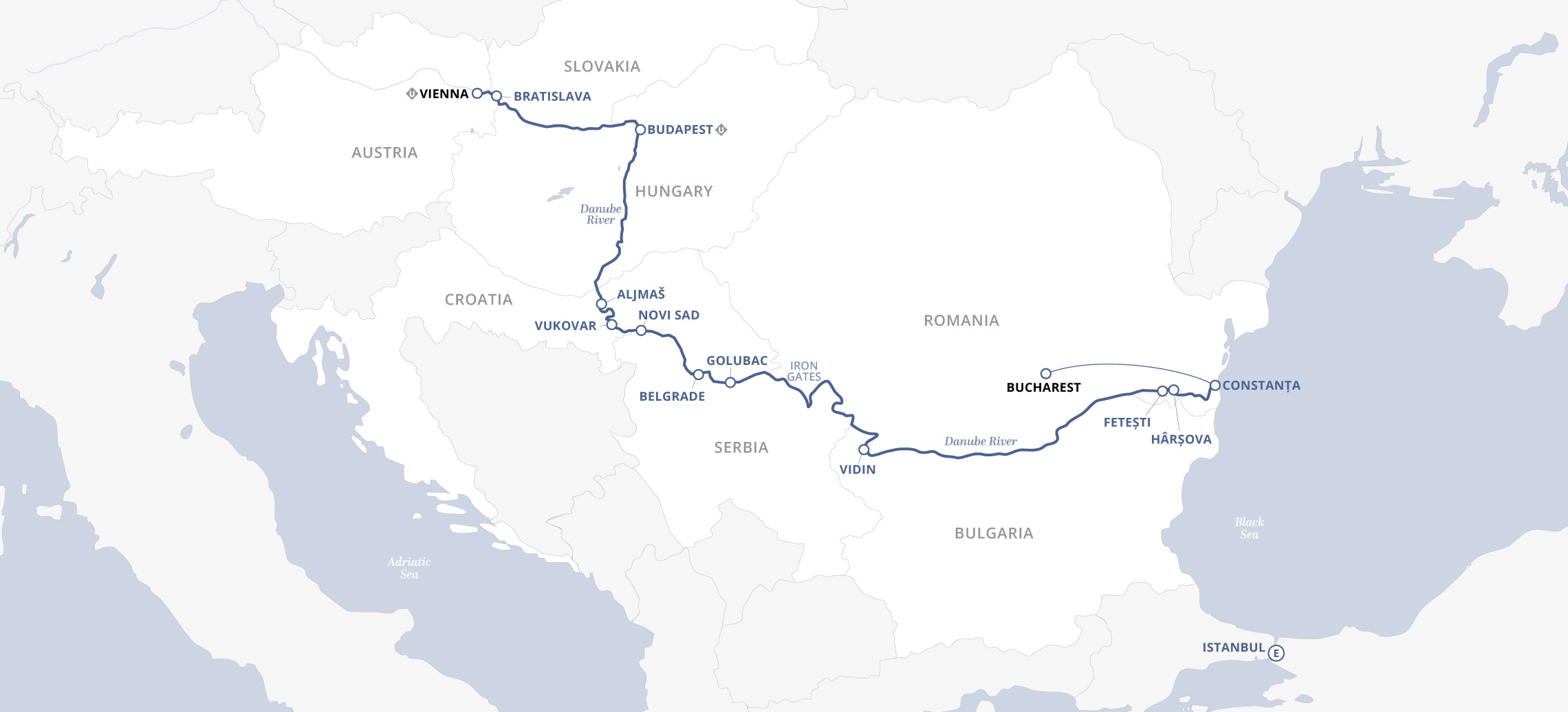
This day-to-day schedule is subject to change. Your official Schedule at a Glance will be delivered with your cruise e-documents 21-30 days prior to embarkation.
Select Cruise Direction
The embarkation location changes by cruise date. Please refer to the Dates & Pricing tab or your cruise ticket for specific departure details.
Day 1
Arrive in Vienna, Transfer to Hotel
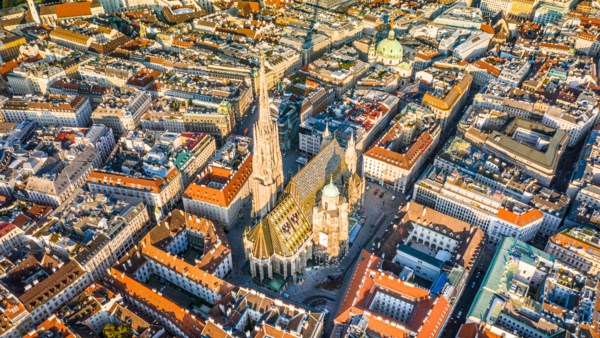
Transfer from Vienna International Airport to your hotel. If you have arranged a Uniworld arrival transfer, you will be greeted by a Uniworld representative and transferred to the hotel.
Day 2
Vienna
Start your day with a tour of the opulent Schönbrunn Palace, one of the grandest examples of Baroque architecture in all of Europe. After, you’ll have the rest of the day to explore the city at your leisure.
Embrace the imperial flair of Vienna with a visit to the famous Schönbrunn Palace complex. Arrive...
Read More
Embrace the imperial flair of Vienna with a visit to the famous Schönbrunn Palace complex. Arrive to marvel at the massive Baroque building with its iconic yellow exteriors. Stroll hallways elaborately decorated with golden stucco, rich velvet, and stunning frescoes. This palace complex was the primary summer residence of the Habsburgs and features many testaments to their history and extravagance.
Day 3
Vienna (Embark)
Before transferring to your ship to begin your cruise, join a morning visit to the Klosterneuburg abbey winery, located just outside of Vienna, for a wine tasting.
Embark on a short drive out of the city to arrive at Klosterneuberg Abbey. With nearly a millennium of...
Read More
Embark on a short drive out of the city to arrive at Klosterneuberg Abbey. With nearly a millennium of history, this Augustinian monastery has been a center of religious, social, and cultural life for centuries. It is also an excellent winery, where quality and craftsmanship are fueled by a long history of viticulture and winemaking.
Admire the abbey’s Baroque church and medieval cloister on a guided tour that includes a viewing of a brilliant copper altarpiece crafted by Nicholas of Verdun. After, enter the historic cellars to sample a selection of the abbey’s fine wines.
Day 4
Vienna
The grand dame of the Danube, Vienna was the heart of the Austro-Hungarian Empire and remains, to this day, the political and cultural center of Austria. Klimt painted here; Beethoven and Mozart composed here; Freud developed his theories here. It’s a treasure trove of splendid architecture, astonishing art collections, and inviting cafés—and today it is yours to explore.
A special Captain’s Welcome Reception and Dinner will be prepared for you this evening.
The Belvedere is a Baroque palatial complex commissioned during an immensely productive Habsburg...
Read More
The Belvedere is a Baroque palatial complex commissioned during an immensely productive Habsburg building spree. Originally the summer residence of Prince Eugene of Savoy, the complex was acquired by Empress Maria Theresa after his death and turned into an exhibition venue for imperial art collections. In this way, the Belvedere become one of the first public museums in the world. Today it is one of the finest art collections anywhere, making it an incredibly popular destination for Vienna tourism. Take a private evening tour of select exhibits, including the world’s largest collection of works by Austrian artist Gustav Klimt. His most famous work, “The Kiss,” is on display here.
Ring Street, the great horseshoe-shaped boulevard lined with many of the city’s major...
Read More
Ring Street, the great horseshoe-shaped boulevard lined with many of the city’s major landmarks—Parliament, City Hall, the Vienna State Opera, glorious palaces, and museums—is a mere 150 years old, practically an infant for a city of Vienna’s age. It replaced the walls and fortifications that had protected the city for centuries. Its construction was a testament to confidence, forward-thinking, and grand urban planning, and it resulted in a 50-year building spree. You’ll pass most of these opulent landmarks on your way to the older section of the city, the area the walls once enclosed.
Later, you’ll walk along Kärntner Street, the celebrated pedestrian boulevard that links the State Opera with St. Stephen’s Cathedral, past the elegant shops on the Graben and the Kohlmarkt. The neighborhood offers a lively combination of historic architecture, street performances, shoppers’ delights, and true Viennese atmosphere.
Today's excursion also includes a visit to Hofburg Palace.
Start your tour by following a local guide through Vienna, taking in the city’s most significant...
Read More
Start your tour by following a local guide through Vienna, taking in the city’s most significant sites as you go. You’ll arrive at Mythos Mozart, a multimedia experience that transforms Mozart’s compositions into an immersive piece of art. Make your way through five different rooms, each with a different story to tell in honor of Vienna’s most famous composer.
Day 5
Bratislava
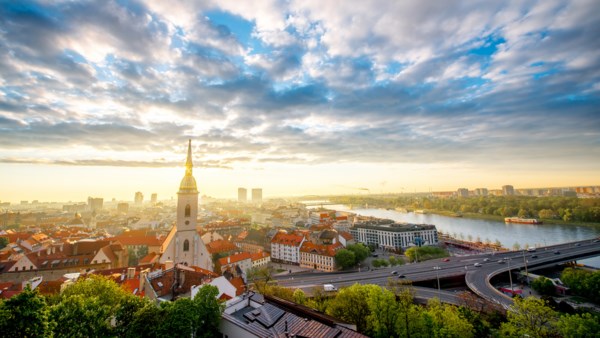
Once hidden from the world behind the “Iron Curtain,” Slovakia retains an air of mystery and intrigue, and its small capital city has an unexpectedly colorful history. The heart and soul of Slovakia, Bratislava is full of surprises. The city straddles the mighty Danube and has played a leading role in the politics and culture of the region for many centuries.
This brilliantly white, enormous square building takes over the skyline of Bratislava, and from its...
Read More
This brilliantly white, enormous square building takes over the skyline of Bratislava, and from its grounds you’ll find incredible views of the city below.
After your hike to the castle, you’ll stroll through the most beautiful part of Bratislava with the local guide. You will be introduced to the Capital of Slovakia, seeing sites like the Presidential Palace and the unique bridge colloquially known as UFO Bridge (you’ll understand when you see it).
Passing through the historic Old Town, we’ll see the charming House of the Good Shepherd, the pastel tower of the Old Town Hall, and statues like Čumil, the sewage worker leaning out of a manhole in the street to smile at passersby.
Don’t let Bratislava’s small size fool you—this charming capital once held outstanding ...
Read More
Don’t let Bratislava’s small size fool you—this charming capital once held outstanding significance to the Hungarian monarchy. In 1563, it was named the capital of Hungary and hosted no less than 18 royal coronations by 1830, including those of Maria Theresa and Maximillian I. Follow the path these monarchs took on their coronation processions as you explore Bratislava with a local guide, arriving at the site where they were each crowned: St. Martin’s Cathedral. In these historic halls, you will be treated to a small concert arranged privately for our guests.
Day 6
Budapest
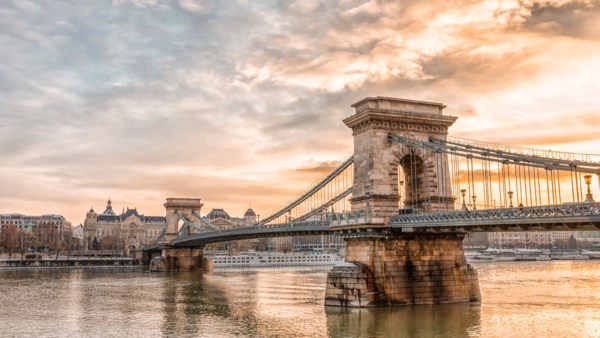
Located on opposite sides of the Danube, Buda and Pest each have a distinctive character and allure. Explore this dynamic and multi-faceted city with your choice of excursions—you can see it from a local’s perspective on a walking tour or cover more ground with a panoramic tour.
Inaugurated in 1876, Andrassy Avenue was the masterpiece of 19th-century Hungary’s most renowned...
Read More
Inaugurated in 1876, Andrassy Avenue was the masterpiece of 19th-century Hungary’s most renowned architects. In one long stretch from Elizabeth Square to Heroes’ Square, this grand boulevard was lined with palatial Neo-Renaissance buildings and accented with plentiful trees. Today, its streets are filled with high-end boutiques, restaurants, and cafés, all interspersed with historic buildings in a stunning blend of old and new.
People-watch and learn the history behind some of the most iconic buildings on this strip—including the beautiful Hungarian State Opera House—as you take a walk with a local guide. After, you’ll visit the Szabó Ervin Library, a gorgeous, old-fashioned library tucked into a 19th-century aristocrat’s mansion.
Note: Occasionally, the Szabó Ervin Library will not be available, and an alternative experience will be arranged.
This panoramic tour is a wonderful way to get an overview of the city if you have never been here...
Read More
This panoramic tour is a wonderful way to get an overview of the city if you have never been here before. It will carry you from Heroes’ Square, created in 1896 to honor the thousand-year anniversary of Hungary’s founding and its greatest historical figures, past some of the city’s most striking architectural sights—Dohány Street Synagogue, the Hungarian National Museum, the state opera house, St. Stephen’s Basilica, and the truly stunning Parliament Building—to Castle Hill, which has been called the heart of the nation. The city of Buda began here, when King Béla built a strong keep in 1243 as a defense against Mongol invaders; a castle replaced the simple fortress, and over the centuries other castles replaced that one. The current castle is primarily 18th century; a museum dedicated to Budapest’s archaeological finds is housed there, and the Castle Hill district has been designated a UNESCO World Heritage Site. You’ll go inside the magnificent 700-year-old Matthias Church, named for one of Hungary’s greatest kings, and then wend your way on foot to the picturesque Fisherman’s Bastion, whose seven fairytale-like towers represent the seven tribes that originally settled the region. It offers a glorious view of the city and the Danube below.
Note: Visits to the interior of Matthias Church may not be possible on some weekends and Catholic holidays.
Day 7
Batina, Ilok
Welcome to Croatia! This ancient country, which has made a remarkable recovery from a brutal civil war, is noted for its beautiful countryside and thriving folk traditions, as well as simple, deliciously rustic food.
Set out on a sightseeing tour of Osijek with a local guide. As you walk through cultural heart of...
Read More
Set out on a sightseeing tour of Osijek with a local guide. As you walk through cultural heart of Croatia’s Slavonia region, you’ll note the city’s attractive ambience, nostalgic charm, and plentiful green spaces.
Later, you’ll be welcomed into a local family’s home for an authentic country meal before heading off to visit the Vučedol Museum. The concept behind this unique museum is integration into the terrain—the entire structure is designed to be mostly buried in the ground and only the façade is open to the landscape. On the building’s green roof, you can reach the archaeological sites over the museum. Along the serpentine path, you’ll encounter archaeological findings that have been discovered to date, which showcase the daily life and customs during a turbulent time of the immigration of the first Indo-Europeans and their relationship with the native population, the blending of material cultures and religions.
Explore the bounties of nature in Croatia’s Syrmia region today, starting with a drive from Batina ...
Read More
Explore the bounties of nature in Croatia’s Syrmia region today, starting with a drive from Batina to village of Nijemci, where a welcome drink and a local biologist or ornithologist are waiting for you. Set out on a scenic sailing down the Bosut River with your specialist guide, who will point out the various flora and fauna you’ll see along your tour. Disembark the boat to take a leisurely nature walk through the lush Spačva Forest.
Next, we’ll drive to a local farm, where we’ll indulge in an authentic lunch of regional specialties, all produced on-site.
Following your lunch, we’ll continue on to explore the city of Vukovar, with stops at the iconic Vukovar Water Tower, the historic Eltz Manor, and the city center, where Vukovar’s rich heritage and modern life are on display.
Day 8
Novi Sad

Though not a national capital, Novi Sad is the capital of the autonomous province of Vojvodina, an ethnically diverse region with no less than 6 different official languages. Novi Sad is known for its easygoing atmosphere and thriving urban arts scene.
MAKE TRAVEL MATTER® Experiences
Follow a local guide around the city of Novi Sad, a town that seems designed for the perfect leisurely...
Read More
MAKE TRAVEL MATTER® Experiences
Follow a local guide around the city of Novi Sad, a town that seems designed for the perfect leisurely stroll. Flat, walkable streets and charming squares offer something beautiful to look at everywhere you go—whether it’s the surprising pastel hues of Neo-Gothic structures or street art.
The city is a treasure trove of culture and history, and also an excellent jumping-off point for more niche experiences. Today, we’ll visit a local monastery led entirely by women. Here, in addition to participating in personal prayer and liturgical life, the sisters create many works of art, such as painted icons, mosaics, sewn and embroidered gifts, ceramics, rosaries, crosses, and more. All proceeds from their art goes back into the community and the church.
We’ll also visit a traditional Serbian establishment known as a Salas. A salas—pronounced “SAH-lahsh”—is a countryside estate where visitors can experience the rural Serbian lifestyle and appreciate the rustic cuisine of the region. Enjoy a tasting of delicious Serbian fare during our stop here today.
This MAKE TRAVEL MATTER® Experience supports Global Goal 5: Gender Equality; Global Goal 11: Sustainable Cities and Communities; and Global Goal 12: Responsible Consumption and Production.
Our MAKE TRAVEL MATTER® Experiences support sustainable tourism, offering our guests opportunities to directly impact the communities we explore in a positive way.
The Fruška Gora mountain—affectionately known as the Jewel of Serbia—rises just...
Read More
The Fruška Gora mountain—affectionately known as the Jewel of Serbia—rises just outside the city of Novi Sad. Begin your tour today with a visit to a wonderful winery run by a local family that aims to reinvent the Serbian wine industry. Here, you’ll enjoy a guided tasting of their wines, from rich reds and crisp whites to unique local blends.
Next, explore the peaceful Hopovo Monastery, a stunning 16th-century Serbian Orthodox monastery nestled in the Fruška Gora National Park. Admire its beautiful frescoes and learn about its rich spiritual and cultural history.
Finally, conclude your tour with a walk with a local guide through the streets of Novi Sad, Serbia’s charming cultural capital.
Day 9
Belgrade
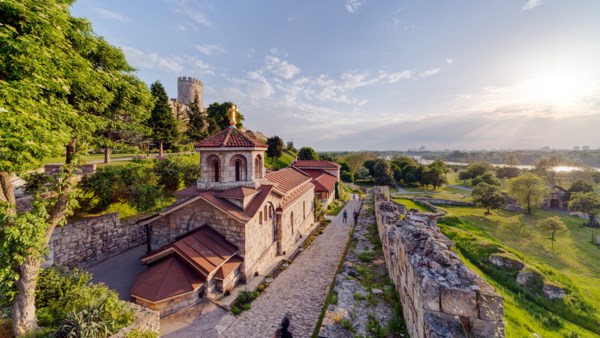
Belgrade, the modern-day capital of Serbia, is one of Europe’s oldest cities, dating back some 7,000 years. Signs of its tumultuous history are visible everywhere, juxtaposed with the city’s vibrant modern-day present.
In the evening, a special Captain’s Farewell Reception and Dinner will be prepared for you.
Mount a bike and spend a leisurely half-day getting an up-close look at Belgrade. Ride towards the...
Read More
Mount a bike and spend a leisurely half-day getting an up-close look at Belgrade. Ride towards the island of Ada Ciganlija, an island in the middle of the Sava river with picturesque bike paths that wind through a beautiful park and beach. We’ll circle through the park, just as the locals do when they are looking for an active day out, and take a break with a refreshment before heading back to the ship.
As a motorcoach carries you through the city, you’ll see a mix of architectural styles that reveal ...
Read More
As a motorcoach carries you through the city, you’ll see a mix of architectural styles that reveal the city’s past, ranging from Gothic, Ottoman, baroque, and art nouveau to utilitarian Communist apartment blocks and modern high-rises. You’ll come to a stop at the Karadjordjevic Dynasty Palace, where you’ll sip a glass of sparkling Serbian wine as you tour a compound of palaces built in the 1920s and 1930s. Serbia’s royal family, which is related to most of Europe’s royalty, has a strictly honorary position in modern-day democratic Serbia, but Crown Prince Alexander and his family still live in these palaces. A local expert will show you the public rooms of the Royal Palace, the White Palace, the adjacent chapel, and the spacious grounds.
After touring the palace, it’s time to visit the showstopping Church of Saint Sava. One of the largest Orthodox churches in the world, this impressive building was modeled after Hagia Sophia—evident in the massive copper dome that sits perched above the striking white marble façade.
Day 10
Belgrade
As some of your fellow passengers depart and new ones join the journey, enjoy a day at leisure to relax onboard or explore Belgrade at your own pace.
Day 11
Belgrade
Belgrade, the modern-day capital of Serbia, is one of Europe’s oldest cities, dating back some 7,000 years. Signs of its tumultuous history are visible everywhere, juxtaposed with the city’s vibrant modern-day present.
This evening, a special Captain’s Welcome Reception and Dinner will be prepared for you.
Day 12
Golubac, Cruising the Iron Gates
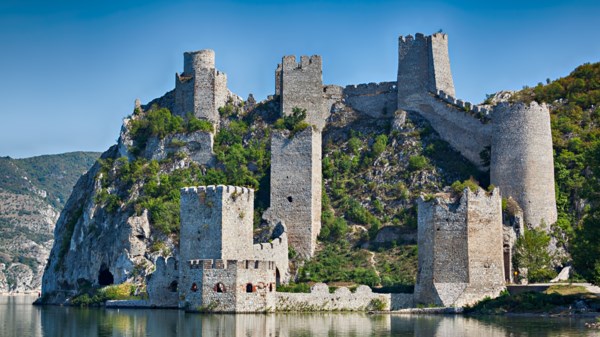
Head ashore to explore a Paleolithic site and an extraordinarily well-preserved medieval fortress. All along the way, history lines the banks of the river. Keep an eye out for Trajan’s Plaque, which the ancient Romans erected to commemorate the road they anchored in the steep cliffs above the water, and Golubac Castle, built in the 14th century and attacked successively by the Serbs, Magyars, and Turks.
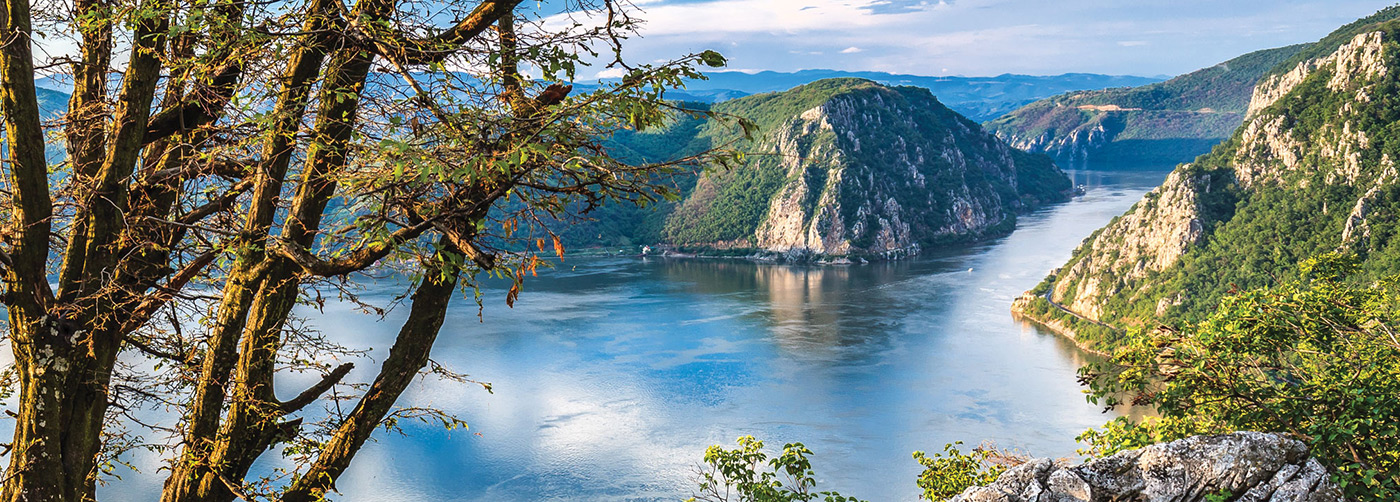
Unwind onboard as you cruise the breathtaking Iron Gates, an 83-mile-long (134-kilometer-long) stretch of scenic gorges that were cut through the Carpathian and Balkan mountains over eons by the Danube River.
Your first stop is Golubac Castle, one of the best-preserved medieval fortresses in Europe, a powerhouse ...
Read More
Your first stop is Golubac Castle, one of the best-preserved medieval fortresses in Europe, a powerhouse that has loomed over the Danube for centuries.
Later you'll visit Lepenski Vir which is one of the largest and most significant prehistoric archeological sites from the Stone Age, located on the Danube. It was once the epicenter of one of the most highly developed prehistoric cultures, with complex social relations and even rudimentary urban planning. The discovery of this prehistoric settlement has changed the image experts once had about the early Stone Age, expanding scientists’ knowledge about human communities that walked the earth millennia ago.
Take in the breathtaking landscape of Djerdap National Park, where rolling green hills rise above a...
Read More
Take in the breathtaking landscape of Djerdap National Park, where rolling green hills rise above a stretch of calm Danube waters. We’ll set out on an easygoing hike, approximately half a mile each way, to the best vantage spot in the park: the Kovilovo Viewpoint. This spacious outlook presides over an impressive portion of the Danube that is about a mile wide.
Day 13
Vidin
Vidin is a port town on the Danube that once played an important role in medieval Bulgarian politics, as the great fortress Baba Vida attests. It’s your base for an unusual excursion today—a visit to the fascinating Belogradchik rock formations. Alternatively, indulge in a wine tasting in a unique setting.
Drive through the scenic Bulgarian countryside to Belogradchik, a small town in the foothills of the...
Read More
Drive through the scenic Bulgarian countryside to Belogradchik, a small town in the foothills of the Balkan Mountains, not far from the Serbian border. After some light refreshment at a local hotel, you’ll be ready to explore the astonishing rock formations nearby, which are over 200 million years old—and have inspired nearly as many legends! Many of the strange wind- and weather-hewn shapes have names, such as Adam and Eve, the Bear, and the Castle. The outcroppings formed a natural defense for the town that was enhanced with man-made fortifications over the centuries. Whether you choose to hike with a local expert to the top of the path or not, you’ll be rewarded with spectacular views. Your return will take you past some sights that highlight Vidin’s mixed heritage: the Orthodox cathedral, the Turkish mosque, the Konak (the 18th-century headquarters of the Turkish police), and the cruciform barracks (which date to the 1790s). The final stop will be Baba Vida, whose stern 10th-century stone walls were built on the site of a Roman watchtower.
Day 14
Fetești
Select one of two ways to explore the Romanian countryside, home to rustic traditions and vineyards shaped by a generous allotment of annual sunshine and a unique terroir.
Day 15
Hârșova
This ancient city has been uniquely shaped by its position on the lush Danube Delta environment. Home to over 300 bird species and a diverse array of mammals, reptiles, and fish, the Danube Delta is the largest and most well-preserved river delta in Europe.
Day 16
Constanța
Named for Roman Emperor Constantine, Constanța’s long history is one of shifting Greek, Roman, and Ottoman rule. This historic atmosphere pairs beautifully with the city's breezy, coastal location and sun-soaked charm.
In the evening, a special Captain’s Farewell Reception and Dinner will be prepared for you.
Day 17
Constanța (Disembark), Bucharest
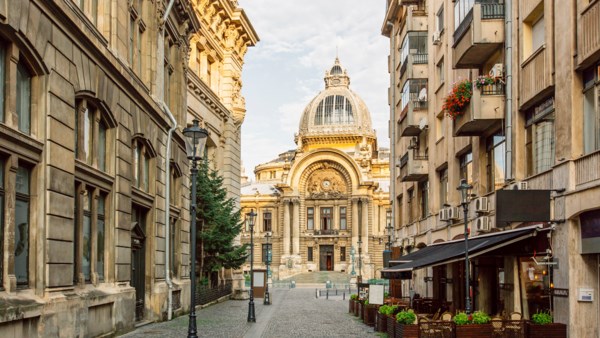
This morning, you’ll disembark the ship in Constanța and transfer to Bucharest. Tonight, you’ll relax in the comfort of a luxury hotel located in the heart of the city, Romania’s capital and its cultural and economic center.
Bucharest began as a fortress in the 15th century, a warlike origin that set the tone for its turbulent...
Read More
Bucharest began as a fortress in the 15th century, a warlike origin that set the tone for its turbulent history. It saw glory days as the summer residence of the Wallachian princes and was burned to the ground by the Ottoman Turks; then Austria-Hungary and imperial Russia fought over it for a century. After Wallachia and Moldavia united to form Romania in the mid-19th century, Bucharest enjoyed a prosperity that was reflected in its extravagant architecture, some of which miraculously survived WWII bombing and Communist building programs.
You’ll see Bucharest’s very own Triumphal Arch, which is modeled after the Arc de Triomphe in Paris, and Victoria Boulevard, lined with chic shops and handsomely restored pre-war buildings—and sites where protests brought down Ceaușescu’s regime in 1989. These days Bucharest enjoys a lively and eclectic cultural scene, hosting international arts festivals and concerts, and a measure of prosperity apparent in its busy cafés and thriving street life.
For the most dazzling stop of the day, you’ll visit the colossal People’s Palace, the second largest office building in the world. It’s certainly one of the grandest as well, filled with crystal chandeliers, mosaics, marble, gold leaf, and stained-glass windows. A remnant of the city’s communist history, the building’s original design took a team of approximately 700 architects and was inspired by Socialist Realism, Modernism, and Neoclassical architecture. Though the People’s Palace was ordered by Nicolae Ceaușescu, the last communist leader of Romania, it was not completed until 8 years after his death. The Palace now houses the Romanian Parliament and three museums, including a contemporary art museum and the Museum of Communist Totalitarianism.
Day 18
Bucharest
Check out of your hotel this morning. If you have arranged a Uniworld departure transfer, you will be transferred to Bucharest Henri Coandă International Airport for your flight home.
Day 1
Bucharest
Arrive at Bucharest Henri Coandă International Airport. If you have arranged a Uniworld arrival transfer, you will be greeted by a Uniworld representative and transferred to the hotel.
Day 2
Bucharest, Constanța (Embark)
This morning, you’ll check out of your hotel in Bucharest and explore the city with a local guide before transferring to your ship in Constanța.
Bucharest began as a fortress in the 15th century, a warlike origin that set the tone for its turbulent...
Read More
Bucharest began as a fortress in the 15th century, a warlike origin that set the tone for its turbulent history. It saw glory days as the summer residence of the Wallachian princes and was burned to the ground by the Ottoman Turks; then Austria-Hungary and imperial Russia fought over it for a century. After Wallachia and Moldavia united to form Romania in the mid-19th century, Bucharest enjoyed a prosperity that was reflected in its extravagant architecture, some of which miraculously survived WWII bombing and Communist building programs.
You’ll see Bucharest’s very own Triumphal Arch, which is modeled after the Arc de Triomphe in Paris, and Victoria Boulevard, lined with chic shops and handsomely restored pre-war buildings—and sites where protests brought down Ceaușescu’s regime in 1989. These days Bucharest enjoys a lively and eclectic cultural scene, hosting international arts festivals and concerts, and a measure of prosperity apparent in its busy cafés and thriving street life.
For the most dazzling stop of the day, you’ll visit the colossal People’s Palace, the second largest office building in the world. It’s certainly one of the grandest as well, filled with crystal chandeliers, mosaics, marble, gold leaf, and stained-glass windows. A remnant of the city’s communist history, the building’s original design took a team of approximately 700 architects and was inspired by Socialist Realism, Modernism, and Neoclassical architecture. Though the People’s Palace was ordered by Nicolae Ceaușescu, the last communist leader of Romania, it was not completed until 8 years after his death. The Palace now houses the Romanian Parliament and three museums, including a contemporary art museum and the Museum of Communist Totalitarianism.
Day 3
Constanța
Named for Roman Emperor Constantine, Constanța’s long history is one of shifting Greek, Roman, and Ottoman rule. This historic atmosphere pairs beautifully with the city's breezy, coastal location and sun-soaked charm.
In the evening, a special Captain’s Welcome Reception and Dinner will be prepared for you.
Day 4
Hârșova
This ancient city has been uniquely shaped by its position on the lush Danube Delta environment. Home to over 300 bird species and a diverse array of mammals, reptiles, and fish, the Danube Delta is the largest and most well-preserved river delta in Europe.
Day 5
Ruse
Bulgaria’s foremost Danube port, Ruse is sometimes called “Little Vienna” for its elegant 19th-century mansions and public buildings.
Twice the capital of Bulgaria—before and after the Ottomans conquered the nation—Veliko...
Read More
Twice the capital of Bulgaria—before and after the Ottomans conquered the nation—Veliko Tarnovo climbs steep hills above the Yantra River, topped by the ruins of Tsarevets, the stronghold where Bulgaria’s kings ruled between 1185 and 1393. The remains of the great stone walls and towers that you see formed the historic heart of the Second Bulgarian Empire. History lives in this town, as a quick look at the wares for sale in Samovod Marketplace will show you: Handicrafts are all made by local artisans using ancient, medieval, or Renaissance technologies. You’ll have time to peruse the exceptional local pottery and textiles there before heading to Arbanassi, home to six amazing 17th-century stone churches, each one decorated with colorful and intricate frescoes. Learn something of the multicultural history of this fascinating town at the Ethnographic Museum and visit the UNESCO-designated Nativity Church, where murals of the Nativity, the Last Judgment, and the zodiac brilliantly blend religious and humanist iconography. At another of the churches, Holy Archangels Michael and Gabriel, you’ll hear the otherworldly singing of an Orthodox choir in a short concert. Your day’s adventure includes a traditional three-course Bulgarian lunch, complete with live folk music.
Walk through the woods of Rusenski Lom, a protected region that is home to a wide variety of rare birds, ...
Read More
Walk through the woods of Rusenski Lom, a protected region that is home to a wide variety of rare birds, among other wildlife, to Ivanovo Rock Monastery—once an enclave of more than 40 churches and chapels that the devout built inside caves above the Lom River Valley. A UNESCO World Heritage Site, it is famous for its beautiful and well-preserved 14th-century murals.
Your next destination, the Basarbovo Rock Monastery, is the only rock monastery where monks still live and worship today. Climb the narrow rock stairway to the 15th-century cloister, which is cut into the limestone cliffs high above the Lom River, and take a look at the arresting frescoes. You’ll also spend some time in Ruse, a city with an easygoing, gracious feeling. Freedom Square, a huge open plaza, takes its name from the Freedom Monument, which soars from the center of the square; the stately Belle Epoque buildings surrounding the square attest to the city’s prosperity in the 1890s. Stroll along wide, tree-lined Alexandrovska, the main pedestrian street that links the city’s many attractive squares, encountering such landmark sights as Ruse’s grand theater, the city museum, and the first movie theater (it opened in 1896).
Day 6
Calafat
Dock in Calafat, with Romania on one side of the Danube and Bulgaria on the other. Enjoy your choice between two excursions today: stay in Romania with a tour through the grand architectural highlights of Craiova or cross the river to Vidin, a port town that once played an important role in medieval Bulgarian politics, as the great fortress Baba Vida attests.
Day 7
Golubac, Cruising the Iron Gates
Head ashore to explore a Paleolithic site and an extraordinarily well-preserved medieval fortress. All along the way, history lines the banks of the river. Keep an eye out for Trajan’s Plaque, which the ancient Romans erected to commemorate the road they anchored in the steep cliffs above the water, and Golubac Castle, built in the 14th century and attacked successively by the Serbs, Magyars, and Turks.
Unwind onboard as you cruise the breathtaking Iron Gates, an 83-mile-long (134-kilometer-long) stretch of scenic gorges that were cut through the Carpathian and Balkan mountains over eons by the Danube River.
Your first stop is Golubac Castle, one of the best-preserved medieval fortresses in Europe, a powerhouse ...
Read More
Your first stop is Golubac Castle, one of the best-preserved medieval fortresses in Europe, a powerhouse that has loomed over the Danube for centuries.
Later you'll visit Lepenski Vir which is one of the largest and most significant prehistoric archeological sites from the Stone Age, located on the Danube. It was once the epicenter of one of the most highly developed prehistoric cultures, with complex social relations and even rudimentary urban planning. The discovery of this prehistoric settlement has changed the image experts once had about the early Stone Age, expanding scientists’ knowledge about human communities that walked the earth millennia ago.
Take in the breathtaking landscape of Djerdap National Park, where rolling green hills rise above a...
Read More
Take in the breathtaking landscape of Djerdap National Park, where rolling green hills rise above a stretch of calm Danube waters. We’ll set out on an easygoing hike, approximately half a mile each way, to the best vantage spot in the park: the Kovilovo Viewpoint. This spacious outlook presides over an impressive portion of the Danube that is about a mile wide.
Day 8
Belgrade
Belgrade, the modern-day capital of Serbia, is one of Europe’s oldest cities, dating back some 7,000 years. Signs of its tumultuous history are visible everywhere, juxtaposed with the city’s vibrant modern-day present.
This evening, a special Captain’s Farewell Reception and Dinner will be prepared for you.
Day 9
Belgrade
As some of your fellow passengers depart and new ones join the journey, enjoy a day at leisure to relax onboard or explore Belgrade at your own pace.
Day 10
Belgrade
Belgrade, the modern-day capital of Serbia, is one of Europe’s oldest cities, dating back some 7,000 years. Signs of its tumultuous history are visible everywhere, juxtaposed with the city’s vibrant modern-day present.
A special Captain’s Welcome Reception and Dinner will be prepared for you this evening.
Mount a bike and spend a leisurely half-day getting an up-close look at Belgrade. Ride towards the...
Read More
Mount a bike and spend a leisurely half-day getting an up-close look at Belgrade. Ride towards the island of Ada Ciganlija, an island in the middle of the Sava river with picturesque bike paths that wind through a beautiful park and beach. We’ll circle through the park, just as the locals do when they are looking for an active day out, and take a break with a refreshment before heading back to the ship.
As a motorcoach carries you through the city, you’ll see a mix of architectural styles that reveal ...
Read More
As a motorcoach carries you through the city, you’ll see a mix of architectural styles that reveal the city’s past, ranging from Gothic, Ottoman, baroque, and art nouveau to utilitarian Communist apartment blocks and modern high-rises. You’ll come to a stop at the Karadjordjevic Dynasty Palace, where you’ll sip a glass of sparkling Serbian wine as you tour a compound of palaces built in the 1920s and 1930s. Serbia’s royal family, which is related to most of Europe’s royalty, has a strictly honorary position in modern-day democratic Serbia, but Crown Prince Alexander and his family still live in these palaces. A local expert will show you the public rooms of the Royal Palace, the White Palace, the adjacent chapel, and the spacious grounds.
After touring the palace, it’s time to visit the showstopping Church of Saint Sava. One of the largest Orthodox churches in the world, this impressive building was modeled after Hagia Sophia—evident in the massive copper dome that sits perched above the striking white marble façade.
Day 11
Novi Sad
Though not a national capital, Novi Sad is the capital of the autonomous province of Vojvodina, an ethnically diverse region with no less than 6 different official languages. Novi Sad is known for its easygoing atmosphere and thriving urban arts scene.
MAKE TRAVEL MATTER® Experiences
Follow a local guide around the city of Novi Sad, a town that seems designed for the perfect leisurely...
Read More
MAKE TRAVEL MATTER® Experiences
Follow a local guide around the city of Novi Sad, a town that seems designed for the perfect leisurely stroll. Flat, walkable streets and charming squares offer something beautiful to look at everywhere you go—whether it’s the surprising pastel hues of Neo-Gothic structures or street art.
The city is a treasure trove of culture and history, and also an excellent jumping-off point for more niche experiences. Today, we’ll visit a local monastery led entirely by women. Here, in addition to participating in personal prayer and liturgical life, the sisters create many works of art, such as painted icons, mosaics, sewn and embroidered gifts, ceramics, rosaries, crosses, and more. All proceeds from their art goes back into the community and the church.
We’ll also visit a traditional Serbian establishment known as a Salas. A salas—pronounced “SAH-lahsh”—is a countryside estate where visitors can experience the rural Serbian lifestyle and appreciate the rustic cuisine of the region. Enjoy a tasting of delicious Serbian fare during our stop here today.
This MAKE TRAVEL MATTER® Experience supports Global Goal 5: Gender Equality; Global Goal 11: Sustainable Cities and Communities; and Global Goal 12: Responsible Consumption and Production.
Our MAKE TRAVEL MATTER® Experiences support sustainable tourism, offering our guests opportunities to directly impact the communities we explore in a positive way.
The Fruška Gora mountain—affectionately known as the Jewel of Serbia—rises just...
Read More
The Fruška Gora mountain—affectionately known as the Jewel of Serbia—rises just outside the city of Novi Sad. Begin your tour today with a visit to a wonderful winery run by a local family that aims to reinvent the Serbian wine industry. Here, you’ll enjoy a guided tasting of their wines, from rich reds and crisp whites to unique local blends.
Next, explore the peaceful Hopovo Monastery, a stunning 16th-century Serbian Orthodox monastery nestled in the Fruška Gora National Park. Admire its beautiful frescoes and learn about its rich spiritual and cultural history.
Finally, conclude your tour with a walk with a local guide through the streets of Novi Sad, Serbia’s charming cultural capital.
Day 12
Batina, Ilok
Welcome to Croatia! This ancient country, which has made a remarkable recovery from a brutal civil war, is noted for its beautiful countryside and thriving folk traditions, as well as simple, deliciously rustic food.
Visit the Vučedol Culture Museum. The concept behind this unique museum is integration into the...
Read More
Visit the Vučedol Culture Museum. The concept behind this unique museum is integration into the terrain—the entire structure is designed to be mostly buried in the ground and only the façade is open to the landscape. On the building’s green roof, you can reach the archaeological sites over the museum. Along the serpentine path, you’ll encounter archaeological findings that have been discovered to date, which showcase the daily life and customs during a turbulent time of the immigration of the first Indo-Europeans and their relationship with the native population, the blending of material cultures and religions.
Following your time at the museum, you’ll be welcomed into a local family’s home for a traditional meal before embarking on a sightseeing tour of Osijek with a local guide. As you walk through cultural heart of Croatia’s Slavonia region, you’ll note the city’s attractive ambience, nostalgic charm, and plentiful green spaces.
Explore the bounties of nature in Croatia’s Syrmia region today, starting with a drive from Batina ...
Read More
Explore the bounties of nature in Croatia’s Syrmia region today, starting with a drive from Batina to village of Nijemci, where a welcome drink and a local biologist or ornithologist are waiting for you. Set out on a scenic sailing down the Bosut River with your specialist guide, who will point out the various flora and fauna you’ll see along your tour. Disembark the boat to take a leisurely nature walk through the lush Spačva Forest.
Next, we’ll drive to a local farm, where we’ll indulge in an authentic lunch of regional specialties, all produced on-site.
Following your lunch, we’ll continue on to explore the city of Vukovar, with stops at the iconic Vukovar Water Tower, the historic Eltz Manor, and the city center, where Vukovar’s rich heritage and modern life are on display.
Day 13
Budapest
Located on opposite sides of the Danube, Buda and Pest each have a distinctive character and allure. Explore this dynamic and multi-faceted city with your choice of excursions—you can see it from a local’s perspective on a walking tour or cover more ground with a panoramic tour.
This panoramic tour is a wonderful way to get an overview of the city if you have never been here...
Read More
This panoramic tour is a wonderful way to get an overview of the city if you have never been here before. It will carry you from Heroes’ Square, created in 1896 to honor the thousand-year anniversary of Hungary’s founding and its greatest historical figures, past some of the city’s most striking architectural sights—Dohány Street Synagogue, the Hungarian National Museum, the state opera house, St. Stephen’s Basilica, and the truly stunning Parliament Building—to Castle Hill, which has been called the heart of the nation. The city of Buda began here, when King Béla built a strong keep in 1243 as a defense against Mongol invaders; a castle replaced the simple fortress, and over the centuries other castles replaced that one. The current castle is primarily 18th century; a museum dedicated to Budapest’s archaeological finds is housed there, and the Castle Hill district has been designated a UNESCO World Heritage Site. You’ll go inside the magnificent 700-year-old Matthias Church, named for one of Hungary’s greatest kings, and then wend your way on foot to the picturesque Fisherman’s Bastion, whose seven fairytale-like towers represent the seven tribes that originally settled the region. It offers a glorious view of the city and the Danube below.
Note: Visits to the interior of Matthias Church may not be possible on some weekends and Catholic holidays.
Inaugurated in 1876, Andrassy Avenue was the masterpiece of 19th-century Hungary’s most renowned...
Read More
Inaugurated in 1876, Andrassy Avenue was the masterpiece of 19th-century Hungary’s most renowned architects. In one long stretch from Elizabeth Square to Heroes’ Square, this grand boulevard was lined with palatial Neo-Renaissance buildings and accented with plentiful trees. Today, its streets are filled with high-end boutiques, restaurants, and cafés, all interspersed with historic buildings in a stunning blend of old and new.
People-watch and learn the history behind some of the most iconic buildings on this strip—including the beautiful Hungarian State Opera House—as you take a walk with a local guide. After, you’ll visit the Szabó Ervin Library, a gorgeous, old-fashioned library tucked into a 19th-century aristocrat’s mansion.
Note: Occasionally, the Szabó Ervin Library will not be available, and an alternative experience will be arranged.
Day 14
Bratislava
Once hidden from the world behind the “Iron Curtain,” Slovakia retains an air of mystery and intrigue, and its small capital city has an unexpectedly colorful history. The heart and soul of Slovakia, Bratislava is full of surprises. The city straddles the mighty Danube and has played a leading role in the politics and culture of the region for many centuries.
In the evening, a special Captain’s Farewell Reception and Dinner will be prepared for you.
Don’t let Bratislava’s small size fool you—this charming capital once held outstanding ...
Read More
Don’t let Bratislava’s small size fool you—this charming capital once held outstanding significance to the Hungarian monarchy. In 1563, it was named the capital of Hungary and hosted no less than 18 royal coronations by 1830, including those of Maria Theresa and Maximillian I. Follow the path these monarchs took on their coronation processions as you explore Bratislava with a local guide, arriving at the site where they were each crowned: St. Martin’s Cathedral. In these historic halls, you will be treated to a small concert arranged privately for our guests.
This brilliantly white, enormous square building takes over the skyline of Bratislava, and from its...
Read More
This brilliantly white, enormous square building takes over the skyline of Bratislava, and from its grounds you’ll find incredible views of the city below.
After your hike to the castle, you’ll stroll through the most beautiful part of Bratislava with the local guide. You will be introduced to the Capital of Slovakia, seeing sites like the Presidential Palace and the unique bridge colloquially known as UFO Bridge (you’ll understand when you see it).
Passing through the historic Old Town, we’ll see the charming House of the Good Shepherd, the pastel tower of the Old Town Hall, and statues like Čumil, the sewage worker leaning out of a manhole in the street to smile at passersby.
Day 15
Vienna
The grand dame of the Danube, Vienna was the heart of the Austro-Hungarian Empire and remains, to this day, the political and cultural center of Austria. Klimt painted here; Beethoven and Mozart composed here; Freud developed his theories here. It’s a treasure trove of splendid architecture, astonishing art collections, and inviting cafés—and today it is yours to explore.
The Belvedere is a Baroque palatial complex commissioned during an immensely productive Habsburg...
Read More
The Belvedere is a Baroque palatial complex commissioned during an immensely productive Habsburg building spree. Originally the summer residence of Prince Eugene of Savoy, the complex was acquired by Empress Maria Theresa after his death and turned into an exhibition venue for imperial art collections. In this way, the Belvedere become one of the first public museums in the world. Today it is one of the finest art collections anywhere, making it an incredibly popular destination for Vienna tourism. Take a private evening tour of select exhibits, including the world’s largest collection of works by Austrian artist Gustav Klimt. His most famous work, “The Kiss,” is on display here.
Ring Street, the great horseshoe-shaped boulevard lined with many of the city’s major...
Read More
Ring Street, the great horseshoe-shaped boulevard lined with many of the city’s major landmarks—Parliament, City Hall, the Vienna State Opera, glorious palaces, and museums—is a mere 150 years old, practically an infant for a city of Vienna’s age. It replaced the walls and fortifications that had protected the city for centuries. Its construction was a testament to confidence, forward-thinking, and grand urban planning, and it resulted in a 50-year building spree. You’ll pass most of these opulent landmarks on your way to the older section of the city, the area the walls once enclosed.
Later, you’ll walk along Kärntner Street, the celebrated pedestrian boulevard that links the State Opera with St. Stephen’s Cathedral, past the elegant shops on the Graben and the Kohlmarkt. The neighborhood offers a lively combination of historic architecture, street performances, shoppers’ delights, and true Viennese atmosphere.
Today's excursion also includes a visit to Hofburg Palace.
Start your tour by following a local guide through Vienna, taking in the city’s most significant...
Read More
Start your tour by following a local guide through Vienna, taking in the city’s most significant sites as you go. You’ll arrive at Mythos Mozart, a multimedia experience that transforms Mozart’s compositions into an immersive piece of art. Make your way through five different rooms, each with a different story to tell in honor of Vienna’s most famous composer.
Day 16
Vienna (Disembark), Transfer to Hotel
Transfer from the ship to a five-star hotel in Vienna for the final two nights of your journey. Later today, you’ll enjoy a tasting of Austrian wines at the Klosterneuburg abbey winery, located just outside of Vienna.
Embark on a short drive out of the city to arrive at Klosterneuberg Abbey. With nearly a millennium of...
Read More
Embark on a short drive out of the city to arrive at Klosterneuberg Abbey. With nearly a millennium of history, this Augustinian monastery has been a center of religious, social, and cultural life for centuries. It is also an excellent winery, where quality and craftsmanship are fueled by a long history of viticulture and winemaking.
Admire the abbey’s Baroque church and medieval cloister on a guided tour that includes a viewing of a brilliant copper altarpiece crafted by Nicholas of Verdun. After, enter the historic cellars to sample a selection of the abbey’s fine wines.
Day 17
Vienna
Start your day with a tour of the opulent Schönbrunn Palace, one of the grandest examples of Baroque architecture in all of Europe. After, you’ll have the rest of the day to explore the city at your leisure.
Embrace the imperial flair of Vienna with a visit to the famous Schönbrunn Palace complex. Arrive...
Read More
Embrace the imperial flair of Vienna with a visit to the famous Schönbrunn Palace complex. Arrive to marvel at the massive Baroque building with its iconic yellow exteriors. Stroll hallways elaborately decorated with golden stucco, rich velvet, and stunning frescoes. This palace complex was the primary summer residence of the Habsburgs and features many testaments to their history and extravagance.
Day 18
Depart Vienna
Check out of your hotel this morning. If you have arranged a Uniworld departure transfer, you will be transferred to Vienna International Airport for your flight home.
2028 | Meander your way from Belgium to Switzerland, visiting no less than six different countries along the way.
Learn More
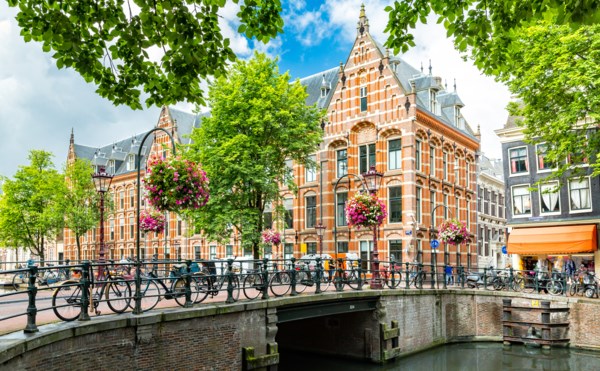
2028 | Find inspiration in the romantic, soul-stirring beauty of the fabled Rhine—now with two nights in Amsterdam!
Learn More
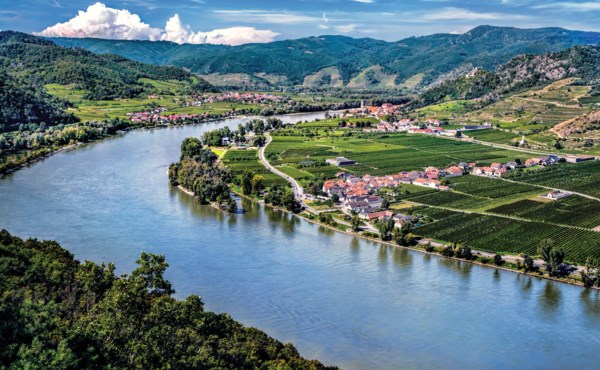
2028 | On this epic voyage through six nations, take in the full splendor of the Danube River.
Learn More